Browse by
Limit to
| Exhibit Thumbnail | Title | Locations | Subjects |
|---|---|---|---|
| Exhibits | |||
|
"A Case for Reparations at the University of Chicago": Sources
A selection of original manuscripts, publications, and legal documents that trace the connections and continuities between the Old University of Chicago and the new University, founded in 1890. |
Locations
Regenstein Bookstacks, 4th Floor April 25 — Aug. 11, 2019 View web exhibit >> |
|
|
(Co)-Humanitarian
(Co)-Humanitarian used print and visual resources to illustrate the ideological and geographic divisions between South and North Korea. The exhibit also conveyed North Korea’s human rights issues. |
Locations
Regenstein 5th Floor Reading Room May 1 — Aug. 1, 2017 View web exhibit >> |
Subjects
Area Studies Korean Studies |
|
1900: Books from the Collection of Robert Rosenthal
Featuring books published in the year 1900 that were collected by the late Robert Rosenthal, curator of Special Collections from 1953 to 1989, this exhibition recaptures the forgotten culture of the turn of the century. |
Locations
The Hanna Holborn Gray Special Collections Research Center Jan. 1 — May 31, 1996 |
Subjects
History |

|
20 Years and After: Korean Collections Consortium of North America (KCCNA)
The Korean Collections Consortium of North America (KCCNA) was founded in 1994 with 6 member institutions, with the University of Chicago quickly joining as the 7th member in 1995. This exhibit shows a selection of the University of Chicago’s KCCNA-assigned subject books. |
Locations
Regenstein Bookstacks, 5th Floor March 1 — April 1, 2016 View web exhibit >> |
Subjects
Korean Studies |
|
The Adaptations of Augie March: A Novel By Saul Bellow, A Play By David Auburn, A Production Directed By Charles Newell, An Exhibition by Special Collections & Court Theatre
Saul Bellow’s 1953 masterpiece, The Adventures of Augie March, launched his reputation as a novelist and established the future Nobel Laureate's literary renown. Court Theatre commissioned the Pulitzer Prize- and Tony Award-winning playwright David Auburn, AB ‘91, to adapt Augie March for its stage. This exhibit follows the successive transformations of Bellow's text as Auburn and Director Charles Newell work with their creative team to bring the play to life. |
Locations
The Hanna Holborn Gray Special Collections Research Center April 29 — Aug. 30, 2019 |
Subjects
Literature |
|
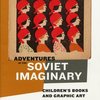
Adventures in the Soviet Imaginary: Children's Books and Graphic Art
Adventures in the Soviet Imaginary examines both the intensive and extensive dimensions of Soviet posters and children books. |
Locations
The Hanna Holborn Gray Special Collections Research Center Aug. 22 — Dec. 30, 2011 View web exhibit >> |
Subjects
Slavic/Eastern Europe/Eurasia Art |
|
African Americans in the Sciences
The Library joins the University of Chicago in its celebration of the anniversary of Martin Luther King, Jr.'s birth with Highlights from the Library's African American Collections. |
Locations
Crerar Library, 1st Floor: Other Spaces Jan. 7 — Jan. 31, 2005 |
Subjects
African-American Studies |
|
African-American Studies: Resources in the University of Chicago Library
This exhibition explores the University of Chicago Library's broad array of research materials documenting African-American history and culture. |
Locations
The Hanna Holborn Gray Special Collections Research Center Feb. 1 — June 1, 1999 |
Subjects
African-American Studies |
|
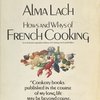
Alma Lach's Kitchen
This exhibition explores Alma Lach’s wide-ranging culinary career and displays selections from her fascinating collection of cookbooks. |
Locations
The Hanna Holborn Gray Special Collections Research Center Sept. 19 — Jan. 6, 2017 View web exhibit >> |
Subjects
Humanities |
|
American Popular Music and Entertainment: The Gay Nineties to the Great Depression
Exploring a unique era in American musical and cultural history, the exhibit features sheet music, cylinders, discs, and phonographs from the extensive private collection of Allen G. Debus, the Morris Fishbein Professor of History of Science and Medicine at the University of Chicago. |
Locations
The Hanna Holborn Gray Special Collections Research Center March 1 — May 31, 1989 |
Subjects
Music |
|
Animal-Vegetable-Mineral: Natural History Illustration from the John Crerar Collection
The art and beauty of illustrated natural history books is celebrated in this exhibition. The collection exemplifies the development of natural history illustration and the role of the image in disseminating knowledge of the natural sciences. |
Locations
The Hanna Holborn Gray Special Collections Research Center May 1 — Sept. 30, 1991 |
Subjects
History of Science Art |
|
Anthropology at Chicago: Tradition, Discipline, Department
Marking the fiftieth anniversary of the Department of Anthropology, this exhibit traces anthropology at Chicago from the early work of Frederick Starr through the notable era of Fay-Cooper Cole, Edward Sapir, Robert Redfield, William Lloyd Warner, and A.R. Radcliffe-Brown. Concluding sections review the contributions of Sol Tax, Milton Singer, McKim Marriott, Fred Eggan, Lloyd Fallers, David Schneider, Clifford Geertz, and other leaders of late-twentieth-century American anthropology. |
Locations
The Hanna Holborn Gray Special Collections Research Center Jan. 1 — Dec. 31, 1979 |
Subjects
University of Chicago Anthropology |
|
|
Antiquarianism and Archeology: Publications of the Society of Dilettanti
The exhibit illustrates the growth of Dilettantism from self-indulgent pastime of the rich to a founding element of the scientific and historical study of antiquity. The books included in the exhibit reflect the character of both an emergent archeology and the social and cultural atmosphere which surrounded it. |
Locations
The Hanna Holborn Gray Special Collections Research Center Feb. 1 — April 1, 1985 |
Subjects
Archaeology |
|
|
Arcangela Tarabotti: A Literary Nun in Baroque Venice
The exhibition focuses on the writing and cultural context of Arcangela Tarabotti, a Benedictine nun who published defenses of women that protested against social injustice, especially that of forced religious vocations. |
Locations
The Hanna Holborn Gray Special Collections Research Center April 1 — Aug. 31, 1997 |
Subjects
Women's Studies Italian Literature |
|
Archetype and Adaptation: Passover Haggadot from the Stephen P. Durschlag Collection
“Archetype and Adaptation” explores the enduring influence of early printed Haggadot as well as the ability of modern versions to reflect political and social developments such as the Holocaust, Zionism, gay rights, and feminism. |
Locations
The Hanna Holborn Gray Special Collections Research Center April 2 — May 12, 2012 |
Subjects
Jewish Studies |
|
Art in the Stacks
The Special Collections Research Center is known for being the University of Chicago Library’s center for rare books, manuscripts, and university archives. Nestled within these materials, there is a lesser known aspect of our collections—art. Art in the Stacks highlights these holdings with a selection of original paintings, drawings, and sculptures, in addition to artists’ books and other works on paper produced in the 20th and early 21st centuries. |
Locations
The Hanna Holborn Gray Special Collections Research Center June 19 — Sept. 15, 2017 View web exhibit >> |
Subjects
Art |
|
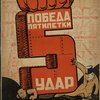
An Art of Persuasion: Soviet Posters from the Library's Collections
The exhibit showcases twenty-four Soviet political posters from the 1930s. Drawn from the E.M. Bakwin Collection of Soviet Posters and the War Poster Collection in the Library, the exhibition explores the role that these images played in rallying the peoples of the Soviet Union to take up social, political, and war-time causes. |
Locations
The Hanna Holborn Gray Special Collections Research Center July 1 — Oct. 31, 1987 |
Subjects
Art Slavic/Eastern Europe/Eurasia |
|
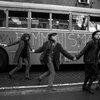
Artivism: Italy and Social Justice
Art activism in Italy in the 1960s and 1970s |
Locations
Regenstein 3rd Floor Reading Room June 11 — Dec. 15, 2018 View web exhibit >> |
Subjects
Music Art Italian Literature |
|
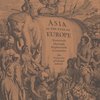
Asia in the Eyes of Europe: Sixteenth through Eighteenth Centuries
From the time of the Renaissance onward, Western consciousness has been shaped by a multitude of diverse and rapidly changing images of Asia and its peoples. This exhibition examines the process of Western exploration and discovery of Asia. |
Locations
The Hanna Holborn Gray Special Collections Research Center Jan. 1 — May 31, 1991 |
Subjects
History Southern Asia |
|
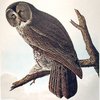
Audubon's Birds
This exhibition serves as a model for an irregular series of displays from the set of Audubon prints over the next few years. |
Locations
The Hanna Holborn Gray Special Collections Research Center March 1 — May 1, 1996 |
Subjects
Organismal Biology Art |
|
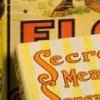
The B. Heller & Co. Collection
Founded by Benjamin Heller, whose family practiced sausage-making for generations, Chicago-based B. Heller & Co. began in 1893. Eager to take advantage of new developments in food science and chemistry as well as his skills as a salesman, Benjamin Heller was the quintessential American entrepreneur. |
Locations
The Hanna Holborn Gray Special Collections Research Center March 1 — June 30, 2009 View web exhibit >> |
Subjects
Advertising Chicago and Illinois |
|
Banks and Bubbles: The Earl J. Hamilton Collection on the History of Economics
Exhibition of works on the history of economics, in particular, the development of commerce and trade in England, France, and Spain in the 17th and 18th centuries. |
Locations
The Hanna Holborn Gray Special Collections Research Center June 1 — Oct. 31, 1995 |
Subjects
Economics History |
|
|
Beneath the Surface: World War I Submarine Warfare from Robert M. Grant Collection
Robert M. Grant, Carl Darling Buck Professor Emeritus in the Department of New Testament and Early Christian Literature in the Divinity School, maintained an interest in submarines throughout his career. This exhibition, which may surface as a surprise to some, is drawn from Professor Grant's research collection, and is one of a series of exhibits highlighting the breadth and variety of the University of Chicago faculty's private collections. |
Locations
The Hanna Holborn Gray Special Collections Research Center Feb. 1 — May 31, 1988 |
Subjects
European History Military & Naval Sciences |
|
The Berlin Collection
Showcasing the collection of nearly 100,000 books and manuscripts purchased by William Rainey Harper in Berlin in 1891, which became the core of the University of Chicago Library's holdings and have had an abiding influence on the course of scholarly investigation at the University. |
Locations
The Hanna Holborn Gray Special Collections Research Center Jan. 1 — Dec. 31, 1979 View web exhibit >> |
Subjects
University of Chicago Library |
|
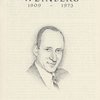
Bernard Weinberg, 1909-1973: A Tribute and a Bibliography
An exhibition of Italian and French Books of the Renaissance from the Bequest of Bernard Weinberg, University of Chicago scholar and teacher. |
Locations
The Hanna Holborn Gray Special Collections Research Center Jan. 1 — Dec. 31, 1974 |
Subjects
Italian Literature French Literature |
|
Between the Boards: Collections, Compilations and Curiosities from the John Crerar Collection of Rare Books in the History of Science and Medicine
This exhibition celebrates the surprising discoveries while cataloging over 20,000 volumes from the John Crerar Collection of Rare Books in the History of Science and Medicine. It illustrates the ingenuity of the authors and other compilers, the creative scope of the personal and institutional collectors who brought these items together, the skill of catalogers who described the materials, and the exciting opportunities awaiting researchers. |
Locations
The Hanna Holborn Gray Special Collections Research Center March 1 — June 30, 2003 |
Subjects
History of Science History of Medicine History of Print |
|
|
The Biblical Text: Modern Typography and the Presentation of the Sacred Word
Standards of printing generally declined in the centuries following the Gutenberg, as the task of producing books fell from a scholarly profession to a craft and then a trade. Biblical texts offer an ideal arena in which to follow this central debate among modern fine printers. |
Locations
The Hanna Holborn Gray Special Collections Research Center March 1 — May 1, 1989 |
Subjects
Special Collections |
|
A Bibliographical Avocation: The Lester King Collection
For the exhibit, Dr. King has chosen books that illustrate his view of the foundations of eighteenth century medical thought. This exhibit affords an opportunity to see these extraordinary books through the eyes of the man who has collected them, owned them, and used them in his own scholarly research. |
Locations
The Hanna Holborn Gray Special Collections Research Center Oct. 1 — Jan. 1, 1985 |
Subjects
History of Medicine |

|
Bibliosaurus!
Sixty-five million years ago, at the end of the Cretaceous Period, dinosaurs became extinct. Yet look around, and these prehistoric creatures appear to be thriving in our popular culture. Using children’s books, journals, monographs, original artwork, movie posters and other types of media, Bibliosaurus! explores how dinosaurs transformed from objects of intense scientific inquiry into outsize figures in everyday life. |
Jan. 2 — April 19, 2024 View web exhibit >> |
|
|
Bibliothecae: A Selection from the Library of Richard P. McKeon
This exhibit presents the remarkable personal library of Richard P. McKeon, Charles F. Grey Distinguished Service Professor Emeritus, Committee on Disciplines of the Humanities, Committee on General Studies in the Humanities, Committee on Analysis of Ideas and Study of Methods, Department of Classical Languages and Literatures, and the Department of Philosophy, the University of Chicago. |
Locations
The Hanna Holborn Gray Special Collections Research Center May 1 — Sept. 1, 1982 |
Subjects
Special Collections |
|
The Black Metropolis Research Consortium: Fifteen Years of Preserving and Documenting Black History and Culture in Chicago
The Black Metropolis Research Consortium (BMRC) is a Chicago-based membership association that aids in expanding broad access to its members’ holdings of materials that document African American and African diasporic history, politics and culture, with a specific focus on materials relating to Chicago. Our members include universities, libraries, museums, community, arts-based and government archives. It is the mission of the BMRC to connect all who seek to document, share, understand and preserve Black experiences. In 2021, the BMRC celebrates its 15th anniversary. This exhibit documents the origins of the BMRC, its efforts to aid discoverability and access to Black historical collections, and the consortium’s flagship Summer Short-term Fellowship and Archie Motley Archival Internship programs. |
Locations
The Hanna Holborn Gray Special Collections Research Center View web exhibit >> |
Subjects
American History African-American Studies History |
|
Blair Through the Ages: An Exhibition in Memory of Walter Blair
This exhibition surveys the work of Walter Blair (A.M. '26, Ph.D. '31), Professor Emeritus in English Language & Literature, who died on June 29, 1992. Blair was one of the first scholars to focus on American humor, and he was also an editor of Mark Twain. |
Locations
The Hanna Holborn Gray Special Collections Research Center Dec. 1 — Feb. 1, 1993 |
Subjects
Literature |
|
Bloch's Fische
Marcus Eliser Bloch's Allgemine Naturgeschichte der Fische(1782-1795) is one of the most impressive early attempts to represent fish from all over the world accurately and handsomely. This exhibit is drawn from the Library's collection of plates from Bloch's work, which numbers 219 plates. |
Locations
The Hanna Holborn Gray Special Collections Research Center Jan. 1 — Dec. 1, 1980 |
Subjects
Special Collections |

|
A Bold Experiment: The Origins of the Sciences at the University of Chicago
In celebration of the 125th anniversary of the University of Chicago's founding, this exhibit looks back at the establishment of the natural sciences at the University. |
Locations
Crerar Library, 1st Floor: Other Spaces Sept. 21 — March 31, 2016 View web exhibit >> |
Subjects
University of Chicago History of Science |
|
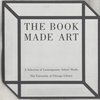
The Book Made Art: A Selection of Contemporary Artists' Books
The books in the exhibition challenge traditional notions of the codex form through the use of electricity, the continuous film-strip, embroidery, glass, ceramic, and various other media. |
Locations
The Hanna Holborn Gray Special Collections Research Center Feb. 1 — May 1, 1986 |
Subjects
Special Collections |

|
Book Use, Book Theory: 1500-1700
This exhibition, co-curated by Bradin Cormack and Carla Mazzio, will examine the relationship between book use and forms of knowledge production in the early modern period (up through about 1700). |
Locations
The Hanna Holborn Gray Special Collections Research Center March 1 — July 31, 2005 View web exhibit >> |
Subjects
History of Print |
|
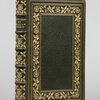
A Book by Its Cover: Decorative Book Bindings from the Medieval Codex to Contemporary Artists' Books
A Book by Its Cover considers how innovations in binding structure, decoration and design can be used to transform a book’s paratext into an essential part of the textual whole. Works on view include treasure bindings, fine bindings from the Guild of Women Binders, and artist’s bindings—Karen Hanmer’s patchwork binding for Mary Shelley’s Frankenstein, for example—in which the books’ covers can be read as integral to the narrative texts they envelop. |
Locations
The Hanna Holborn Gray Special Collections Research Center Feb. 7 — April 29, 2022 View web exhibit >> |
|
|
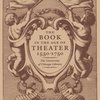
The Book in the Age of Theatre. 1550-1750
This exhibition explores the relationship between the printed book and the theater during a key period in their developments in Europe. |
Locations
The Hanna Holborn Gray Special Collections Research Center Jan. 1 — April 1, 2001 |
Subjects
Theater |
|
Books from a Friend: The Old Northwest Depicted from the Collection of Florence Lowden Miller
This exhibit showcases rare books and maps from the Collection which record the exploration and settlement in the eighteenth and nineteenth centuries early travelers to the American Midwest. |
Locations
The Hanna Holborn Gray Special Collections Research Center Nov. 1 — Jan. 1, 1989 |
Subjects
American History |
|
|
Bound to Vary: Billy Budd, Sailor
This traveling exhibit, mounted by the Guild of Book Workers, showcases the work of seventeen Guild members. Each item is a uniquely bound copy of the same limited edition of Herman Melville's Billy Budd, Sailor, hand printed at Married Mettle Press, Papermill, and Bindery. |
Locations
The Hanna Holborn Gray Special Collections Research Center May 1 — June 1, 1988 |
Subjects
Special Collections |
|
Building Collections: Celebrating Twenty-Five Years of the Joseph Regenstein Library
Drawing on the concept of "building" as both physical space and intellectual activity, this exhibition highlights twenty-five of the notable book, manuscript, and archival collections acquired by the University Library since 1970. |
Locations
The Hanna Holborn Gray Special Collections Research Center Sept. 1 — Jan. 31, 1996 |
Subjects
University of Chicago Library |
|
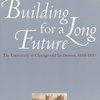
Building for a Long Future: The University of Chicago and Its Donors, 1889-1930
This exhibition explores the motivations and purposes of the varied group of donors who supported the University of Chicago from the time of its founding in the late 1880s to the conclusion of the extensive campus building campaign of the late 1920s and early 1930s. |
Locations
The Hanna Holborn Gray Special Collections Research Center May 1 — Dec. 31, 2001 View web exhibit >> |
Subjects
University of Chicago |
|
But Is It A Book?
One of life’s most familiar objects, the codex book, is also one of the most innovative and adaptable technologies for making and sharing meaning devised by humankind. But what makes a book a book? Must it have pages, text, and a rectangular shape to qualify? "But Is It a Book?" is a choosable-path exhibition that investigates the nature of the material text, considering examples from the long arc of book history, from the clay tablet to the contemporary artist’s book. |
Locations
The Hanna Holborn Gray Special Collections Research Center Jan. 3 — April 28, 2023 View web exhibit >> |
Subjects
Library Science |
|
By Study and By Watchfulness
This exhibition of illustrated editions of Ovid and artists' depictions of people with books, selected from the collection of William and Marianne Salloch, is dedicated to both pursuits. |
Locations
The Hanna Holborn Gray Special Collections Research Center March 1 — May 1, 1984 |
Subjects
Classics |
|
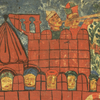
Byzantine Manuscripts of the New Testament from the Goodspeed Collection
The manuscripts presented in this exhibition represent a selection from the University's collection of New Testament manuscripts, named for Professor Edgar J. Goodspeed (1871-1962) of the Department of New Testament and Early Christian Literature. |
Locations
The Hanna Holborn Gray Special Collections Research Center Oct. 1 — Oct. 31, 1982 |
Subjects
Religion |
|
|
Cabinet of Curiosities
This exhibit brings together a selection of the objects-from art to odd memorabilia-drawn from the Library's rare book, manuscript, and archival collections. The exhibit includes Roman coins and Confederate currency, swords and surgical tools, miniature portraits and academic medals, and several locks of hair. |
Locations
The Hanna Holborn Gray Special Collections Research Center Nov. 1 — March 31, 1984 |
Subjects
Special Collections |
|
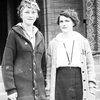
Capturing the Stars: The Untold History of Women at Yerkes Observatory
Women contributed to the advancement of astronomy and astrophysics at Yerkes Observatory in the early twentieth century. Women were not only calculators or assistants. They earned degrees, conducted their own research, collaborated on projects with peers of both sexes, worked on publications, and used their time at Yerkes to launch a wide range of careers.. Their lives and labor are preserved in documents in the Library's archival collections. The stories of some of these women and their previously invisible labor are now told in this exhibition. |
Sept. 18 — Dec. 15, 2023 View web exhibit >> |
|
|
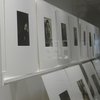
Carl Van Vechten
Carl Van Vechten (1880-1964, University of Chicago Ph.B. '03), arts critic, novelist and photographer, played an important role in the American literary and arts scene of the 1920s through the 1940s. In addition to the acclaim he received for his own work, Van Vechten was instrumental in promoting the careers of other writers and artists, among them Langston Hughes, Gertrude Stein and Wallace Stevens. |
Locations
The Hanna Holborn Gray Special Collections Research Center July 1 — Oct. 1, 1994 |
Subjects
American Literature Photography |
|
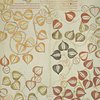
A Catalogue to an Exhibition of Notable Books and Manuscripts from the Collections of the University of Chicago Library Prepared for the Dedication of the Joseph Regenstein Library
This exhibition showcases 109 highlights from the the Department of Special Collections on the occasion of the dedication of the Regenstein Library. |
Locations
The Hanna Holborn Gray Special Collections Research Center Jan. 1 — Dec. 31, 1970 |
Subjects
University of Chicago Library Special Collections |
|
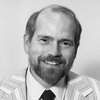
Catalyst for Change: On the Occasion of Martin Runkle's Retirement as Library Director
This exhibition covers the career of Martin Runkle, on the occasion of his retirement as University of Chicago Library Director |
Locations
The Hanna Holborn Gray Special Collections Research Center Aug. 1 — Oct. 1, 2004 |
Subjects
University of Chicago Library |
|
|
Celebrating our Friends: Recent Gifts to the Special Collections Research Center
Recent gifts to the Special Collections Research Center are featured in this exhibition on the occasion of the 50th anniversary of its founding. |
Locations
The Hanna Holborn Gray Special Collections Research Center Nov. 1 — Feb. 29, 2004 |
Subjects
Special Collections |

|
Celebrating the Poetry of Asia & the Middle East
For their inaugural joint exhibit, five area-studies librarians on the fifth floor of the Joseph Regenstein Library celebrate poetry from their own areas of expertise. |
Locations
Regenstein Bookstacks, 5th Floor May 1 — June 30, 2018 View web exhibit >> |
Subjects
Korean Studies Middle East Southern Asia Japanese Studies Chinese Studies |
|
Censorship and Information Control
Why do people censor? For ambition? Religion? Profit? Power? Fear? This global history of attempts to control or silence information, from antiquity’s earliest written records to our new digital world, examines how censorship has worked, thrived, or failed in different times and places, and shows how real censorship movements tend to be very different from the centralized, methodical, top-down censorship depicted in Orwell’s 1984, which so dominates how we imagine censorship today. From indexes of forbidden books, to manuscripts with passages inked out by Church Inquisitors, to comics and pornography, to self-censorship and the subtle censorship of manipulating translations or teaching biased histories, the banned and challenged materials in this exhibit will challenge you to answer: how do you define what is and isn’t censorship? |
Sept. 17 — Dec. 14, 2018 View web exhibit >> |
Subjects
History |
|
|
A Central European Life in an Age of Crisis: Camill Hoffmann, 1878-1944
This exhibition traces the life of Camill Hoffmann (1878-1944), a poet, editor, translator and Czech diplomat, from avant-garde Austria to the fate of a Jewish intellectual under the Nazis. |
Locations
The Hanna Holborn Gray Special Collections Research Center Nov. 1 — Dec. 1, 2001 |
Subjects
Literature |
|
The Chain Reaction: December 2, 1942 and After
This exhibition was organized to commemorate the fiftieth anniversary of the world's first controlled, self-sustaining nuclear chain reaction, an achievement of Enrico Fermi and his colleagues at the Metallurgical Laboratory at the University of Chicago. |
Locations
The Hanna Holborn Gray Special Collections Research Center Oct. 1 — Dec. 1, 1992 |
Subjects
History of Science University of Chicago Physical Sciences |
|
Charles Otis Whitman: His Science, His Special Birds, and the Marine Biological Laboratory
Charles Whitman was a pioneer in the study of animal behavior, and one of his main research interests was the passenger pigeon. This exhibit examines Whitman's legacy at the University of Chicago and beyond. |
Locations
Crerar Library, 1st Floor: Other Spaces Jan. 6 — March 21, 2014 View web exhibit >> |
Subjects
Organismal Biology Biological Sciences |
|
Chicago Celebrates Darwin
The John Crerar Library presents Chicago Celebrates Darwin, an exhibit which revisits the Darwin Centennial Celebration hosted by the University in 1959. We look back at the original letters, pictures, and documents from that conference to get a sense of the atmosphere and the importance of the events, including the effect of Darwin’s theories on the research and popular opinion of the day. |
Locations
Crerar Library, 1st Floor: Other Spaces Oct. 19 — March 26, 2010 View web exhibit >> |
Subjects
Chicago and Illinois Biological Sciences Organismal Biology University of Chicago Ecology & Evolution |
|
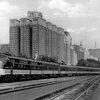
Chicago Central: A History of Rails and Trains in the City
The exhibit examines some elements of this history, including the city's stations, trains and rail workers and innovations in train technology. |
Locations
Crerar Library, 1st Floor: Other Spaces April 16 — Oct. 12, 2012 |
Subjects
Chicago and Illinois Technology |
|
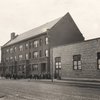
The Chicago Settlement Tradition: A Hull-House Centennial Exhibition
The vanguard of settlement houses in Chicago was Hull-House, founded by Jane Addams in 1889. Two other settlement houses with ties to the University of Chicago, Chicago Commons and the University of Chicago Settlement, are also featured int his exhibit, which commemorates Jane Addams and the founding of Hull-House. |
Locations
The Hanna Holborn Gray Special Collections Research Center Sept. 1 — Oct. 1, 1989 |
Subjects
Sociology |
|
Christian Hebraic Scholarship
The Rosenberger Library's rich collection of Christian Hebraic scholarship forms the basis of this exhibition which focuses on the sometimes accidental, sometimes deliberate contributions of Christian scholars to the preservation of Hebrew usage, and Jewish legal commentaries and ceremonial practices from the thirteenth through the seventeenth centuries. |
Locations
The Hanna Holborn Gray Special Collections Research Center Jan. 1 — Dec. 1, 1983 |
Subjects
Jewish Studies |

|
City Lights Pocket Poets Series 1955-2005: From the Collection of Donald A. Henneghan
This exhibition, celebrating the fiftieth anniversary of the Pocket Poets Series. |
Locations
The Hanna Holborn Gray Special Collections Research Center Oct. 1 — Jan. 1, 2006 |
Subjects
Literature |

|
Closeted/OUT in the Quadrangles: A History of LGBTQ Life at the University of Chicago
Historical view of LGBT faculty, student, and staff life at the University of Chicago. |
Locations
The Hanna Holborn Gray Special Collections Research Center March 30 — June 12, 2015 View web exhibit >> |
Subjects
LGBTQIA Studies University of Chicago |
|
|
Collecting Western Americana: Books from the Library of John Blew
This exhibition examines the work of several important nineteenth-century publishers who edited historical documents of the American West and made them available to a broad audience of readers and scholars. |
Locations
The Hanna Holborn Gray Special Collections Research Center Feb. 1 — April 30, 2002 |
Subjects
American History |
|
|
Collecting the Classics
Collecting the Classics |
Locations
The Hanna Holborn Gray Special Collections Research Center Jan. 1 — Dec. 31, 1977 |
Subjects
Classics |
|
|
A Collector's Churchill
This exhibition is one of a series based on faculty book collections. The exhibit provides a fresh look at the public career of Winston Churchill through the eyes of James H. Lorie, a prolific collector of Churchilliana. |
Locations
The Hanna Holborn Gray Special Collections Research Center Jan. 1 — Dec. 1, 1981 |
Subjects
European History |
|
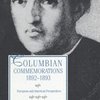
Columbian Commemorations 1892-1893: European and American Perspectives
The exhibition surveys the 400th anniversary celebrations of Christopher Columbus's arrival in America. Memorabilia from the 1893 World's Columbian Exposition including invitations, guidebooks, portfolios of photographs, books, and a special commemorative edition of Harriet Monroe's poem, "Ode," which she read at the opening ceremonies of the Fair. |
Locations
The Hanna Holborn Gray Special Collections Research Center Aug. 1 — Oct. 31, 1993 |
Subjects
History |
|
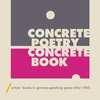
Concrete Poetry, Concrete Book: Artists' Books in German-Speaking Space after 1945
This exhibition highlights the Fluxus movement's conceptual use of the book format. |
Locations
The Hanna Holborn Gray Special Collections Research Center Jan. 17 — March 17, 2017 View web exhibit >> |
|
|
|
Culture of the Camera: The Irving Leiden Collection
Culture of the Camera: The Irving Leiden Collection |
Locations
The Hanna Holborn Gray Special Collections Research Center Jan. 1 — Dec. 31, 1979 |
Subjects
Photography |
|
Curated Mysticism: Visual Representations of the Cosmos and Consciousness
Humans have had a long history of interpreting the "symbols" around them, from divining the future through the arrangement of stars in the night sky, to tracing out the lines of luck and life on palms, to predicting future fortunes from a stack of cards. This rich visual tradition of mysticism has trickled down to us today in the form of magazine horoscopes, "cootie catchers" (origami fortune tellers), appropriated evil eyes, and more recently, the outpouring of mandala colouring books. |
Locations
Regenstein 1st Floor Reading Room May 16 — July 31, 2016 |
Subjects
Religion Art |

|
Cyrus Leroy Baldridge: Illustrator, Explorer, Activist
Cyrus Baldridge (1889-1977) was an artist, illustrator, and author whose travels took him across Africa, Europe, Asia, and the Far East. His artistic training began at age 9, followed by education at the University of Chicago. Baldridge also developed an acute social and political awareness through a range of experiences, from working in a social settlement house to cattle ranching in Texas. |
Locations
The Hanna Holborn Gray Special Collections Research Center June 27 — Sept. 9, 2016 |
Subjects
Humanities Social Sciences Art |
|
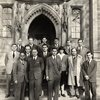
December 2, 1942 and After: The Scientist's Movement in America
This exhibit draws on the University of Chicago Archives to present the pivotal role Chicago has played institutionally in the development of the international atomic scientists' movement that took root in America as crucial consequence of the events of December 2, 1942. |
Locations
The Hanna Holborn Gray Special Collections Research Center Dec. 1 — March 1, 1983 |
Subjects
University of Chicago |
|
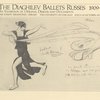
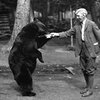
The Diaghilev Ballet Russes, 1909 - 1929: An Exhibition of Original Designs and Documents
This exhibition is being held on the occasion of a dance history seminar funded by a grant from the National Endowment for the Humanities. |
Locations
The Hanna Holborn Gray Special Collections Research Center July 1 — Oct. 1, 1975 |
Subjects
Dance |
|
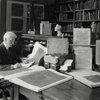
Discovering the Beauty and Charm of the Wilderness: Chicago Connections to the National Park Service
The National Park Service offers a rich variety of landforms, flora, and fauna that have been the subject of many University of Chicago scientific studies. The parks have also served as inspiration for art, photography and literature. To mark the National Park Service’s 100-year anniversary, we delve into the Library’s archives and rare collections to uncover Chicago connections to the parks. |
Locations
Crerar Library, 1st Floor: Other Spaces Oct. 31 — Dec. 31, 2016 View web exhibit >> |
Subjects
Environmental Science Organismal Biology American History University of Chicago |
|
Discovery, Collection, Memory: The Oriental Institute at 100
On the University of Chicago's Campus at 58th Street and University Avenue is one of the world's premier institutions for the study of the Ancient Middle East, the Oriental Institute. The OI has its roots alongside the very founding of the University of Chicago when President Harper mentored a young scholar named James Henry Breasted to pursue a degree in Egyptology. Breasted went on to direct the Haskell Museum around 1900 and secured funding from John D. Rockefeller, Jr. in May 1919 to begin the Oriental Institute. The OI has conducted 100 years of excavation, research, and scholarship. Focusing on the geographical areas of Egypt, Iran, Iraq, Turkey, and Afghanistan, OI scholars have worked rigorously to discover cultural heritage, decipher ancient languages, and to reconstruct the histories of long-lost civilizations. This exhibit remembers the OI's past through a collection of archival fragments, artifacts, and ephemera. |
Locations
The Hanna Holborn Gray Special Collections Research Center Sept. 16 — Dec. 13, 2019 |
Subjects
Archaeology - Ancient Near East University of Chicago |

|
Dog Fight: The Animal Experimentation Debate in Twentieth-Century Chicago
What should be done with unclaimed pound dogs? This question inspired fierce debates in Chicago, where an unusual city ordinance in 1931 granted scientists at the University of Chicago, Northwestern University, and other local medical schools access to stray dogs for experimental purposes. This exhibition explores both sides of that controversy and shows how it continues to shape the ways we discuss biomedical ethics and scientific progress. |
May 8 — Sept. 1, 2023 View web exhibit >> |
Subjects
History History of Science Chicago and Illinois University of Chicago |
|
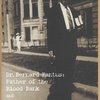
Dr. Bernard Fantus: Father of the Blood Bank
In 1937, Dr. Bernard Fantus (1874-1940) established what is now recognized as the world's first blood bank when he opened a blood preservation laboratory at Chicago's Cook County Hospital. |
Locations
The Hanna Holborn Gray Special Collections Research Center Nov. 1 — Feb. 1, 2005 |
Subjects
History of Medicine |
|
The Dr. Morris Fishbein Collection: An Exhibition of Selected Books in the History of Medicine and the Biological Sciences
Works from the Dr. Morris Fishbein Collection, consisting of books from his personal library and others that support the research and teaching in the history of science and medicine. |
Locations
The Hanna Holborn Gray Special Collections Research Center Oct. 1 — Jan. 31, 1973 |
Subjects
History of Medicine |
|
|
The Dreyfus Affair: In the Public Eye
Almost one-hundred years after it captured worldwide attention and threatened to topple the government of the Third Republic of France, the Dreyfus Affair continues to evoke strong response. The exhibit explores contemporary popular perceptions of the affair through these media in examples drawn from the Ludwig Rosenberger Collection of Judaica. |
Locations
The Hanna Holborn Gray Special Collections Research Center Oct. 1 — March 1, 1989 |
Subjects
European History Jewish Studies |

|
East European Jews in the German-Jewish Imagination from the Ludwig Rosenberger Library of Judaica
This exhibition traces the place of East European Jewry in the imagination and experience of German Jews from emancipation in the nineteenth century to the decline of German-Jewish life on the eve of World War II. |
Locations
The Hanna Holborn Gray Special Collections Research Center Sept. 1 — June 30, 2009 View web exhibit >> |
Subjects
Jewish Studies |

|
The Economics of Library Conservation
The exhibit demonstrates the need for conservation through an examination of some of the materials at stake, displayed alongside discussions of preservation concerns and the costs of particular forms of care for the collection. |
Locations
The Hanna Holborn Gray Special Collections Research Center Jan. 1 — Dec. 1, 1985 |
Subjects
Library Science |
|
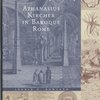
The Ecstatic Journey: Athanasius Kircher in Baroque Rome
Athanasius Kircher (1602-1680), a German Jesuit priest, was called to Rome as Professor of Mathematics at the Roman College in 1635, two years after Galileo's trial and condemnation by the Roman Inquisition. Kircher was also a consummate exploiter of the power of the printed book, as this exhibition illustrates through first and early editions of his works and related materials. |
Locations
The Hanna Holborn Gray Special Collections Research Center Feb. 1 — April 1, 2000 |
Subjects
European History |
|
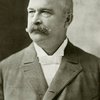
Education for Life: 100 Years of the Laboratory Schools
This exhibition examines the pedagogical philosophy of John Dewey and the founding group of Lab Schools teachers, educators, recent advances in academic standards and educational technology, and demonstrates the varied experiences of students at all levels as they learned and explored individual potential in Lab Schools classrooms, laboratories, theaters, machine shops, art studios, and field trips. |
Locations
The Hanna Holborn Gray Special Collections Research Center May 1 — Oct. 31, 1996 |
Subjects
Education University of Chicago |
|
The Eighteenth Century Views of the Past
This exhibition includes historiographical and antiquarian works in the fields of history, literature, art, music, and science, and illustrates the 18th century's preoccupation with its own past as a way to understand the present. |
Locations
The Hanna Holborn Gray Special Collections Research Center Jan. 1 — Dec. 31, 1978 |
Subjects
European History |
|
Elective Affinities: Private Collectors and Special Collections in Libraries
Elective Affinities: Private Collectors and Special Collections in Libraries |
Locations
The Hanna Holborn Gray Special Collections Research Center Jan. 1 — Dec. 31, 2001 |
Subjects
Special Collections University of Chicago Library |
|
|
Emma Goldman in Her Own Words: Perspectives from the Ludwig Rosenberger Library of Judaica
This exhibition features books, pamphlets, and trial reports by Emma Goldman, drawn from the Ludwig Rosenberger Library of Judaica. |
Locations
The Hanna Holborn Gray Special Collections Research Center Nov. 1 — May 1, 1993 |
Subjects
Political Science Jewish Studies |
|
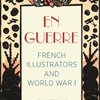
En Guerre: French Illustrators and World War I
En Guerre will offer a fresh examination of World War I through the lens of French graphic illustration of the period. |
Locations
The Hanna Holborn Gray Special Collections Research Center Oct. 14 — Jan. 2, 2015 View web exhibit >> |
Subjects
European History Art |
|
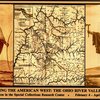
Encountering the American West: The Ohio River Valley, 1750-1820
This exhibition explores the fascinating history of this first American west from the beginning of European American settlement to the end of the frontier period. Includes interrelated themes such as the contrast between native and European American attitudes toward the land, the encounters and confrontations of the pioneer migration era, the role of politics on the early frontier, and the shaping of Western cultural and social institutions. |
Locations
The Hanna Holborn Gray Special Collections Research Center Feb. 1 — April 30, 2002 |
Subjects
American History |
|
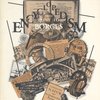
Encyclopedism from Pliny to Borges
The exhibit traces the variety of forms the encyclopedia and the idea of encyclopedic knowledge have taken from the first through 20th centuries. |
Locations
The Hanna Holborn Gray Special Collections Research Center May 1 — Sept. 30, 1990 |
Subjects
History Linguistics |
|
|
Enhancing the Legacy: Gifts from Irmgard Rosenberger to the Ludwig Rosenberger Library of Judaica
This exhibition includes a selection of important recent additions to the Ludwig Rosenberger Library of Judaica presented by Mrs. Irmgard Rosenberger, including a 16th-century decree restricting Jewish actions to the visitor's book used at the Palestine Government House in the 1920s and 1930s. |
Locations
The Hanna Holborn Gray Special Collections Research Center Oct. 1 — June 30, 2003 |
Subjects
Jewish Studies |
|
Enrico Fermi: The Life of a Scientist. Images and documents, including his Chicago years
Enrico Fermi's life unfolds in images and documents, offering insights into this Nobel Prize winning scientist's childhood and youth in Rome, his university studies in Pisa, his love for mountains and sport, and his life as a scientist and teacher in Rome, New York, and Chicago. |
Locations
Crerar Library, 1st Floor: Other Spaces April 6 — Sept. 8, 2006 |
Subjects
Physics History of Science |
|
Envisioning Earth
This exhibit points to historical references to conservation and the environment; the approach is one that is multidisciplinary, accomplished through music, literature, and cartography. |
Locations
Regenstein 3rd Floor Reading Room May 1 — Sept. 4, 2017 View web exhibit >> |
Subjects
Music Literature Maps |
|
Envisioning South Asia: Texts, Scholarship, Legacies
This exhibition introduces the Regenstein Library's extraordinary resources related to South Asia through visual metaphors of imagination, representation, and engagement. |
Locations
The Hanna Holborn Gray Special Collections Research Center Jan. 11 — March 18, 2016 View web exhibit >> |
Subjects
Southern Asia South Asia |
|
Ernest W. Burgess, May 16, 1886-December 27, 1966: An Exhibition of Selections from His Papers
This exhibit reflects the substantial teaching, research, and public service of Ernest W. Burgess. |
Locations
The Hanna Holborn Gray Special Collections Research Center Jan. 1 — Dec. 31, 1974 |
Subjects
Sociology |
|
Eugene Field and His Books
The exhibition, which includes manuscripts, correspondence, limited editions and other materials from the private collection of Frank J. Piehl (Ph.D., 1952) and the holdings of the University of Chicago Library, focuses on Eugene Field (1950-1895) as author, collector and promoter of books and the book arts. |
Locations
The Hanna Holborn Gray Special Collections Research Center Dec. 1 — March 1, 1995 |
Subjects
Special Collections |
|
|
Eureka! Discovering Sources in the Ludwig Rosenberger Library of Judaica
This exhibition explores various access tools to the over 17,000 titles in the Ludwig Rosenberger Library of Judaica, from the topically arranged print catalog published when it was a private collection to records in the Library's online catalog. |
Locations
The Hanna Holborn Gray Special Collections Research Center Nov. 1 — June 30, 2004 |
Subjects
Jewish Studies |
|
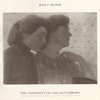
Eva Watson Schutze and the Philosophers' Circle
Eva Watson Schutze, wife of a young German instructor at the University of Chicago, was a founding member of the Phot-Secession, a turn-of-the-century movement led by Alfred Steglitz that sought to establish photography as one of the fine arts. The exhibit includes letters, diaries and memoirs. |
Locations
The Hanna Holborn Gray Special Collections Research Center Jan. 1 — April 1, 1985 |
Subjects
Photography |
|
An Exhibition of First Editions and Manuscripts from the D. H. Lawrence Collection of John E. Baker, Jr.
An exhibition of a private collection of D. H. Lawrence works. |
Locations
The Hanna Holborn Gray Special Collections Research Center Nov. 1 — Dec. 31, 1973 |
Subjects
History of Print |
|
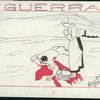
An Exile of 80 Years: The Spanish Civil War and its Diaspora
Eighty years after the Spanish Civil War, this exhibition highlights the experiences of those displaced by it. Drawings made by children who were fleeing the conflict, photographs taken in the residences where refugees were housed, personal effects of those displaced, and publications made while in exile are shown. |
Locations
Regenstein 3rd Floor Reading Room April 22 — June 15, 2019 |
Subjects
European History |
|
Expanding Sources: Recent Additions to Special Collections
As academic fields expand and diversify, Special Collections is building collections to support these new directions. Researchers are drawing on original materials in many areas including race and gender, cinema and media, graphic design, arts practice, and cross-cultural global studies. This exhibition displays recent acquisitions with research potential for a range of disciplines. The materials represent many formats, including children’s books, family letters, journals, fine book design, posters, research notes, clothing, board games, and printed ephemera. |
Locations
The Hanna Holborn Gray Special Collections Research Center Jan. 6 — April 24, 2020 View web exhibit >> |
Subjects
University of Chicago Library Chicago and Illinois University of Chicago |
|
A Family Album--Unfamiliar Faces and Places from the University Archives
This exhibit invites students, faculty, staff, and friends of the University to help identify some of the mysterious people and places represented in unidentified photographs from the University Archives. |
Locations
The Hanna Holborn Gray Special Collections Research Center Feb. 1 — April 1, 1982 |
Subjects
Photography University of Chicago |
|
A Family Tradition: An Exhibition of Books from the Gifts of George Eckels and Virginia Eckels Malone
The exhibit offers a selection from the gifts of two generations of notable book collectors and supporters of the University of Chicago Library. Begun in 1916 with the gift of George Eckels's collection of Cromwelliana, the Eckels family's generous support of the University Library has been continued by his daughter Virginia, culminating in her 1979 additions to the Library's collections. |
Locations
The Hanna Holborn Gray Special Collections Research Center Nov. 1 — April 1, 1981 |
Subjects
History |
|
Far East: An Exhibition of Resources in the University of Chicago Library
The exhibit represents the breadth of the Library's East Asian holdings, which have developed with the University and the Center for East Asian Studies since the Center's beginnings at the University in the 1930s. |
Locations
The Hanna Holborn Gray Special Collections Research Center Jan. 1 — Dec. 31, 1973 |
Subjects
East Asian Studies Chinese Studies Japanese Studies Korean Studies |
|
The Fetus In Utero: From Mystery to Social Media
This exhibition takes an historical approach to exploring the complex evolution of the fetal image in Western Christian culture. We show that before images of the fetus in utero entered the digital age, they have been deployed in three distinctive ways over the past 500 years. |
Locations
The Hanna Holborn Gray Special Collections Research Center Jan. 2 — April 12, 2019 |
Subjects
History of Science |
|
|
Fine Printers Finely Bound
From a fine traditional binding to one emphasizing expression and creativity with materials, each book represents an individual perspective on bookmaking. The 15th Anniversary Exhibition of Chicago Hand Bookbinders exemplifies the successful marriage of the distinctive crafts of fine printing and hand-bookbinding. |
Locations
The Hanna Holborn Gray Special Collections Research Center Feb. 1 — Feb. 28, 1994 |
Subjects
Special Collections History of Print |
|
Firmness Commodity and Delight
Firmness, Commodity, and Delight was the inaugural exhibition in the new Special Collections gallery, running from May through July 2011. The exhibition celebrated the opening of the new SCRC exhibition gallery and the completion of the Joe and Rika Mansueto Library with a display of books, manuscripts, and archival drawings and photographs representing our collections in architecture. The exhibition also had two items provided by the architectural firms who designed the Mansueto and Special Collections spaces – one drawing each from Murphy/Jahn (Helmut Jahn) and Booth Hansen. The exhibition was presented in conjunction with "500 Years of the Illustrated Architecture Book," a city-wide festival marking the publication of the first illustrated book on architecture, the Fra Giocondo edition of Vitruvius's De architectura libri decem. |
Locations
The Hanna Holborn Gray Special Collections Research Center May 9 — July 29, 2011 View web exhibit >> |
Subjects
Architecture |
|
|
Flavius Josephus' "De Bello Judaico"
Exhibit on Flavius Josephus' "De Bello Judaico" |
Locations
The Hanna Holborn Gray Special Collections Research Center Jan. 1 — Dec. 1, 1988 |
Subjects
Greek - Ancient |
|
Flights before the Wrights: Octave Chanute, Chicago. Aeronautical Pioneer, Engineer & Teacher
An exhibition of Octave Chanute's accomplishments and highlights from the visionary's career. Chanute’s novel biplane glider, an engineering masterpiece in the world of 1896 flying machines was the foundation for 20th-century aircraft. |
Locations
Crerar Library, 1st Floor: Other Spaces Nov. 1 — June 1, 2002 View web exhibit >> |
Subjects
Aviation Technology History of Science |
|
Frank Knight 1885-1972
Best known as the founder of the "Chicago School" of free market economics, Frank Knight was an influential member of the University faculty for more than twenty years. |
Locations
The Hanna Holborn Gray Special Collections Research Center Nov. 1 — Jan. 31, 1986 |
Subjects
Economics |
|
Franz Bibfeldt
Fictional theologian, real papers |
View web exhibit >> | |
|
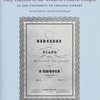
Frederic Chopin and His Publishers
This exhibition, which surveys the relationship between Chopin's music and its publishing history, includes first editions, images of Chopin and his associates; facsimiles of autograph manuscripts; and later editions prepared by Chopin's students and performers of his music. |
Locations
The Hanna Holborn Gray Special Collections Research Center Feb. 1 — April 30, 1998 |
Subjects
Music History of Print |
|
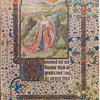
French and Flemish Illuminated Manuscripts from Chicago Collections: An Exhibition in Honor of the 44th Annual Meeting of the Mediaeval Academy of America
Manuscripts from the Newberry Library, the University of Chicago, the Art Institute of Chicago, and private collections were displayed at the Newberry Library in conjunction with the Medieval Society of America. |
Locations
The Hanna Holborn Gray Special Collections Research Center April 1 — May 31, 1969 |
Subjects
French Literature Special Collections |
|
|
Friends of the Library
Friends of the Library |
Locations
The Hanna Holborn Gray Special Collections Research Center Jan. 1 — Dec. 31, 1979 |
Subjects
University of Chicago Library |
|
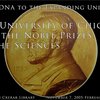
From DNA to the Expanding Universe: The University of Chicago and the Nobel Prizes in the Sciences
This exhibit, originally developed for the Nobel Prize Centennial Exhibition of the Nobel Foundation in Sweden, and displayed in the Museum of Science and Industry in the fall of 2003, has been adapted for display in the John Crerar Library, with a focus on Nobel Prize winning scientists such as Enrico Fermi, Subramanyan Chandrasekhar and James Watson. |
Locations
Crerar Library, 1st Floor: Other Spaces Nov. 7 — Feb. 4, 2006 |
Subjects
Science, Technology, and Math Biological Sciences Physical Sciences University of Chicago |
|
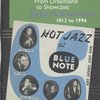
From Dreamland to Showcase: Jazz in Chicago, 1912 to 1996
This show highlights the development of jazz music and musicians in the Chicago area through the use of sheet music, photographs, recordings, music manuscripts, posters and other treasures from the University Library's Chicago Jazz Archive and from private collections. |
Locations
The Hanna Holborn Gray Special Collections Research Center Oct. 1 — Feb. 28, 1997 |
Subjects
Music |
|
|
From Palm Leaf to Printed Text: The Traditional Indic Book
Drawn from the collection donated by Mrs. Edwin Asmann, this exhibit highlights the structure and usage of the palm leaf format, from the preparation of the leaves themselves to their illumination and binding. The manuscripts are also discussed in relationship to their role in the transmission of the Buddhist Canon. |
Locations
The Hanna Holborn Gray Special Collections Research Center May 1 — July 1, 1989 |
Subjects
Southeast Asia Religion Southern Asia South Asia |
|
From Poetry to Verse: The Making of Modern Poetry
This exhibition documents the process of bringing new poetry to the public in all its various formats. Drawing upon the archives of Poetry, Chicago Review, Big Table, Verse, LVNG, and the papers of The Poetry Center of Chicago, the exhibit tracks the evolution and changing character of poetry from 1912 to the present. |
Locations
The Hanna Holborn Gray Special Collections Research Center Sept. 1 — Feb. 28, 2006 |
Subjects
Literature |
|
From Sausage to Hot Dog: the Evolution of an Icon
The hot dog is an American creation, and Chicago even has its own style. But where did this popular food come from and how did it develop? This exhibit looks to the hot dog's origins in sausage-making practices brought by European immigrants to the Midwest. We consider techniques used in neighborhood butcher shops and the rise of industrial meat production. Homemade recipes and artisanal makers past and present are also examined. |
Locations
Crerar Library, 1st Floor: Other Spaces Oct. 29 — Dec. 31, 2013 View web exhibit >> |
Subjects
History of Science History American History Chicago and Illinois |
|
|
Germany on the Eve of the 1848 Revolution: Selections from the Ludwig Rosenberger Library of Judaica
This exhibition focuses on political, social, and cultural trends in Germany during the VormŠrz period, the two decades preceding the March Revolution of 1848. On display are selected works by prominent poets, journalists, and revolutionary theorists, including Heinrich Heine, Ludwig Bšrne, and Karl Marx. |
Locations
The Hanna Holborn Gray Special Collections Research Center May 1 — Oct. 1, 1994 |
Subjects
Jewish Studies |
|
|
Ghosts of the Past: Early Students at the University of Chicago
This web exhibit explores the experiences of early University of Chicago students through letters, scrapbooks, photographs, and other papers from the students' papers in the University Archives. |
View web exhibit >> |
Subjects
University of Chicago |
|
The Good Natur'd Man: Oliver Goldsmith; A Bicentennial Celebration
This exhibition honors the scholarship and teaching of Arthur Friedman, distinguished University of Chicago English Department faculty member and editor of The Collected Works of Oliver Goldsmith. |
Locations
The Hanna Holborn Gray Special Collections Research Center Nov. 1 — Feb. 28, 1975 |
Subjects
English Literature |

|
The Graphics of Revolution and War: Iranian Poster Arts
Designed for mass distribution and aimed towards a large public audience, posters embed social, political, and religious concerns that frequently are articulated through both text and image. Perhaps more so than at any other moment in recent history, posters served as powerful modalities for mobilization and communication during the Iranian Revolution of 1979 and the Iran-Iraq War (1980-88). |
Locations
The Hanna Holborn Gray Special Collections Research Center Oct. 15 — Dec. 18, 2011 View web exhibit >> |
Subjects
Art Middle East |
|
|
A Gray City Dinner Party: Commemorative Dinner Plates from the University Archives
In June 1930, the University of Chicago Magazine notified the alumni of the creation of a special set of Spode dinner plates featuring views of twelve of the University's Gothic buildings. The exhibit offers these notable artifacts of the University's invention of its own self-imagination along with documents and advertisements from the original release. |
Locations
The Hanna Holborn Gray Special Collections Research Center Jan. 1 — Dec. 1, 1985 |
Subjects
University of Chicago |
|
|
A Gray City Playbill: Student Theatre at The University of Chicago, 1895-1950
This exhibit of programs, photographs, and scripts from 55 years of student productions narrates the history of dramatic satire at the University. Beginning with the Dramatic Club, the University's first theater group, founded in 1895, the exhibit traces the development of the University's famous student theater. |
Locations
The Hanna Holborn Gray Special Collections Research Center Nov. 1 — Feb. 1, 1982 |
Subjects
Theater |

|
The Great Ideas: The University of Chicago and the Ideal of Liberal Education
Drawing on the papers of Robert Hutchins, Mortimer Adler, William Benton and Walter Paepcke, this exhibition explores the cultural milieu that made the "Great Ideas" central to the University's educational mission both on and off campus. |
Locations
The Hanna Holborn Gray Special Collections Research Center May 1 — Sept. 30, 2002 |
Subjects
University of Chicago Education |
|
Great Is the Gift that Bringeth Knowledge: Highlights from the History of the John Crerar Library
Marking the 100th anniversary of the death of John Crerar, the exhibition utilized documents, photographs, and artifacts from the Crerar collections to chronicle the library's distinguished collections and effective public service programs from its creation until the merger with the University of Chicago. |
Locations
The Hanna Holborn Gray Special Collections Research Center Oct. 1 — April 1, 1989 |
Subjects
Library Science |

|
The Great Lakes: Our Legacy, Our Future
The exhibit focused on the EPA's Great Lakes National Program Office and their work to ensure the protection and restoration of the Great Lakes. |
Locations
Crerar Library, 1st Floor: Other Spaces March 1 — Oct. 31, 2001 |
Subjects
Environmental Science Urban Studies Ecology & Evolution |
|
|
Hands Making Paper: The Art of Japanese Papermaking
More than thirty-five examples of traditional paper types from Japan, including the multi-layered, tie and fold dyed, gilt, and printed papers, were displayed for the first time in Chicago in this exhibit. |
Locations
The Hanna Holborn Gray Special Collections Research Center June 1 — Sept. 1, 1988 |
Subjects
Art Technology |
|
Harold Swift and the Higher Learning
This exhibition marks the centenary of the birth of Harold H. Swift, who in 1914 became the first alumnus to be appointed to the University Board of Trustees, as well as its youngest member. |
Locations
The Hanna Holborn Gray Special Collections Research Center Jan. 1 — Jan. 1, 1986 |
Subjects
University of Chicago |
|
Hebraica at the University of Chicago
This exhibition honors the long tradition of Hebrew scholarship at the University of Chicago. The books in the exhibition were selected to provide an overview of the scope of the Library's holdings and to indicate the variety of sources which exist. |
Locations
The Hanna Holborn Gray Special Collections Research Center Jan. 1 — Dec. 31, 1965 |
Subjects
Jewish Studies |
|
The Helen and Ruth Regenstein Collection of Rare Books
This exhibition marks a decade of building the Helen and Ruth Regenstein Collection of Rare Books, which was established to enhance the Library's strong collection of English and American literature. |
Locations
The Hanna Holborn Gray Special Collections Research Center Nov. 1 — Jan. 31, 1976 |
Subjects
English Literature |
|
The Helen and Ruth Regenstein Collection of Rare Books: Recent Additions
To mark the fifth anniversary of the death of Mrs. Helen Regenstein and to chart the growth of the collection of rare books that her generosity and vision made possible, the department of Special Collections presents this exhibit representing acquisitions to the collection since her death. |
Locations
The Hanna Holborn Gray Special Collections Research Center Nov. 1 — Jan. 1, 1988 |
Subjects
Literature Special Collections |
|
Highlights from the History of the John Crerar Library
This exhibit presents the history of the John Crerar Library thematically, celebrating the role of the library as an intellectual resource in the city of Chicago, placing the Library within the context of Chicago industrial growth, and highlighting the individuals and institutions that supported, created, and sustained the Library. |
Locations
The Hanna Holborn Gray Special Collections Research Center Dec. 1 — April 1, 1990 |
Subjects
University of Chicago |
|
Historical Documents from Northern Italy: The Rosenthal Collection
This exhibit focuses on the Rosenthal Collection of North Italian Documents, which comprises nearly 2,500 Medieval and Renaissance manuscripts, most of them notarial instruments from Veneto, and originally part of the famous collection of Sir Thomas Phillips (1792-1872). |
Locations
The Hanna Holborn Gray Special Collections Research Center Feb. 1 — April 1, 1984 |
Subjects
Special Collections |
|
A History of Science in Antarctica
This exhibit is a historical look at science in Antarctica. |
Locations
Crerar Library, 1st Floor: Other Spaces Oct. 18 — Dec. 23, 2004 |
Subjects
Environmental Science Ecology & Evolution Geophysical Sciences |
|
Homer in Print: The Transmission and Reception of Homer's Works
Homer in Print illustrates what we can learn when we look beyond the stories to ask what sources went into shaping this particular edition or how the multitude of English translations differ from each other. |
Locations
The Hanna Holborn Gray Special Collections Research Center Jan. 13 — March 15, 2014 View web exhibit >> |
Subjects
Classics |
|
Homosexuality in the City: A Century of Research at the University of Chicago
This exhibition situates the University of Chicago's pioneering approach to the social and cultural study of homosexuality amid the political and cultural developments of the past century, while simultaneously examining the University's role in the policing of homosexuality in Chicago during this same period. |
Locations
The Hanna Holborn Gray Special Collections Research Center Sept. 1 — Dec. 1, 2000 |
Subjects
Gender Studies |
|
Honest Jim: James D. Watson, the Writer
Fifty years ago, James Watson and Francis Crick made one of the major discoveries of the twentieth century: they deciphered the double helical structure of DNA. The discovery began a revolution in molecular biology that led to major advances in science and medicine. |
Locations
Crerar Library, 1st Floor: Other Spaces Jan. 19 — May 28, 2004 View web exhibit >> |
Subjects
Biological Sciences Molecular & Cell Biology History of Science |
|
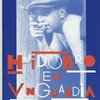
Huidobro Vicente in Avant-Garde
This major exhibition of photographs, manuscripts and books traces the life and work of the avant-garde poet Vicente Huidobo (1893-1948). |
Locations
The Hanna Holborn Gray Special Collections Research Center Jan. 1 — March 1, 1988 |
Subjects
Art Spanish Literature |
|
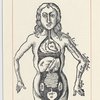
The Human Fabric
The Human Fabric follows the development of anatomical illustration in print from its beginning as a primitive record of early explorations in gross anatomy in the late fifteenth century to the highly refined studies published just prior to the advent of photography. |
Locations
The Hanna Holborn Gray Special Collections Research Center Jan. 1 — Dec. 1, 1981 |
Subjects
History of Science |
|
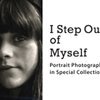
I Step Out of Myself: Portrait Photography in Special Collections
An exhibition of portrait photography collections in the University Archives. |
Locations
The Hanna Holborn Gray Special Collections Research Center Jan. 12 — March 20, 2015 View web exhibit >> |
Subjects
Art Photography University of Chicago |
|
Images of Prayer, Politics and Everyday Life from the Harry and Branks Sondheim Jewish Heritage Collection
This exhibition of the Harry Sondheim (A.B. 1954, J.D. 1957) Collection is organized around representations of the events of the Jewish life-cycle: birth, circumcision, naming, bar mitzvah, marriage, and death-and those of the Jewish calendar-the Sabbath, Rosh Hashanah, Yom Kippur, Simchat Torah, Sukkot, and Passover. |
Locations
The Hanna Holborn Gray Special Collections Research Center March 1 — July 31, 2008 View web exhibit >> |
Subjects
Religion |
|
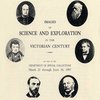
Images of Science and Exploration in the Victorian Century
This exhibition examines three of the most notable achievements of the Victorian age: the development of the theory of natural selection by Charles Darwin and Alfred Wallace; the decades-long search for the Northwest Passage by a succession of British expeditions, including the ill-fated venture of John Franklin; and the discovery by Lord Rayleigh and William Ramsay of argon. |
Locations
The Hanna Holborn Gray Special Collections Research Center March 1 — June 30, 1997 |
Subjects
Ecology & Evolution Chemistry History |
|
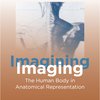
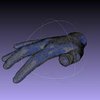
Imaging and Imagining: The Body as Text
The Body as Text explores intersections between the arts and sciences across the history of anatomical representation and medical illustration of the human body. |
Locations
The Hanna Holborn Gray Special Collections Research Center March 1 — June 1, 2014 |
Subjects
History of Medicine |
|
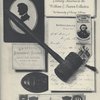
Imaging/Imagining: the Body as Data
Imagining/Imagining the Body as Data examines the data revolution that has transformed modern medical imaging with technologies such as Magnetic Resonance, Computed Tomography and Ultrasound imaging. |
Locations
Crerar Library, 1st Floor: Other Spaces March 25 — June 21, 2014 |
Subjects
Photography Medicine Organismal Biology Biological Sciences |
|
In Lincoln's Time: Sources on 19th century America in the William E. Barton Collection
The exhibition is the first public presentation of the William E. Barton Collection of Lincolniana, and present a balanced account of Lincoln's life in his own work through books, manuscripts, autograph letters, portraits, and artifacts. |
Locations
The Hanna Holborn Gray Special Collections Research Center May 1 — Sept. 30, 1986 |
Subjects
American History |
|
|
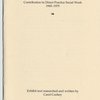
In Support of Many Interests: Recent Friedberg Fund Acquisitions
The exhibit celebrates and demonstrates how this unrestricted contributions of Dr. Stanton and Mrs. Martha Fridberg support a broad range of the Library's interests and research collections, including: medical history, children's literature, religious and political tracts, and architectural history. |
Locations
The Hanna Holborn Gray Special Collections Research Center Jan. 1 — March 1, 1986 |
Subjects
Special Collections |
|
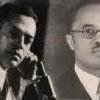
Innovations and Innovators: The School of Social Service Administration's Contribution to Direct Practice Social Work, 1945-1975
This exhibition honors the 50th anniversary of the publication of Charlotte Towle's influential work, Common Human Needs (1945), and three decades of innovation in social work practice by Towle and her colleagues at the School of Social Service Administration. |
Locations
The Hanna Holborn Gray Special Collections Research Center April 1 — June 30, 1995 |
Subjects
Social Services University of Chicago |
|
Integrating the Life of the Mind: African Americans at the University of Chicago, 1870-1940
This exhibit presents original manuscripts, rarely seen portraits and photographs, African American publications, books by African American graduates of the University of Chicago, and other documents that trace the interlocking strands of academic and gradual social integration through the mid-twentieth century. |
Locations
The Hanna Holborn Gray Special Collections Research Center Sept. 1 — Feb. 28, 2009 View web exhibit >> |
Subjects
African-American Studies University of Chicago |

|
Integrity of the Page: The Creative Process of Daniel Clowes
The Clowes archive contains notes, outlines, narrative drafts, character sketches, draft layouts, and more for three of Clowes' books: Ice Haven, Mister Wonderful, and The Death-Ray. The exhibition pieces this material together, tracing the evolution of Clowes' art from conception to production to publication. |
Locations
The Hanna Holborn Gray Special Collections Research Center March 28 — June 17, 2016 View web exhibit >> |
Subjects
History of Print American Literature |
|
|
Isaac Newton and the Principia: A Tercentenary Celebration
In celebration of the 300th anniversary of the publication of Isaac Newton's "Philosophiae Naturalis principia mathematica," this exhibition displays early editions of the Principia in Latin, English, and French, along with other related works from the collection. |
Locations
The Hanna Holborn Gray Special Collections Research Center March 1 — May 1, 1987 |
Subjects
History of Science |
|
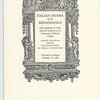
Italian Drama of the Renaissance: An Exhibition of Books from the Collection of the University of Chicago Library
This exhibition highlights the University's strong collection of Renaissance drama, which "includes some of the rarest editions of Italian plays ... and examples of every known dramatic genre from the sixteenth century to the middle of the eighteenth century" and recognizes the gifts of Louis H. Silver, Ira J. Hechler, and Howard Weingrow. |
Locations
The Hanna Holborn Gray Special Collections Research Center Nov. 1 — Dec. 31, 1961 |
Subjects
Italian Literature Theater |
|
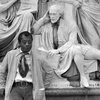
James Baldwin Among The Philosophers
James Baldwin’s work is widely recognized for its religious overtones and influences as well as for its critiques of racism and heterosexual norms. His work is equally important as a contribution to American philosophy. |
Locations
Regenstein 4th Floor Reading Room Sept. 25 — Dec. 31, 2017 View web exhibit >> |
Subjects
African-American Studies Religion |

|
James Franck: The Scientist and Political Responsibility
The James Franck Papers in the University of Chicago Library consist of over 28,000 pieces, including correspondence, scientific manuscripts, personal documents, and memorabilia. |
Locations
The Hanna Holborn Gray Special Collections Research Center Dec. 1 — Feb. 1, 1976 |
Subjects
Physics |
|
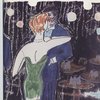
Jazz-The Chicago Scene: The Art of Stephen Longstreet
The Chicago jazz scene of the 1920s and 1930 is memorialized in this exhibit, which showcases over 60 watercolors, drawings, and collages by art-historian and long-time jazz observer Stephen Longstreet. |
Locations
The Hanna Holborn Gray Special Collections Research Center Oct. 1 — Nov. 30, 1989 |
Subjects
Music |
|
|
Jewish Music and Jewish Culture in Germany, 1918-1938
Drawing upon publications in music and the arts in the Rosenberger Library of Judaica, the works displayed in this exhibit narrate the complex transformation of the German-Jewish community on the eve of the Holocaust. |
Locations
The Hanna Holborn Gray Special Collections Research Center Nov. 1 — May 1, 1995 |
Subjects
Jewish Studies |
|
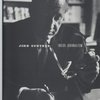
John Gunther: Inside Journalism
The papers of John Gunther, one of the most prominent journalists of the 20th century, have been made public for the first time in this exhibition. Gunther got his start as a literary editor for the Daily Maroon at the University of Chicago, where he graduated in 1922. |
Locations
The Hanna Holborn Gray Special Collections Research Center Sept. 1 — Jan. 1, 1991 |
Subjects
University of Chicago Journalism |
|
John Morris: Photo Journalism
Showcasing the gift of the papers of John Morris, one of the mid-century's most important photographic editors, the exhibit presents photographs by Toni Frissell, Eliot Elisofon, Henri Cartier-Bresson, and Cornell Capa and explains Morris's central role in their use in some of the world's most important news stories. |
Locations
The Hanna Holborn Gray Special Collections Research Center Oct. 1 — Dec. 1, 1990 |
Subjects
Photography |
|
Joseph Halle Schaffner Collection in the History of Science
This exhibition presents 107 highlights from the Schaffner bequest of over 300 landmark works in science, including works by Bacon, Boyle, Darwin, Descartes, Kepler, and Newton. |
Locations
The Hanna Holborn Gray Special Collections Research Center Jan. 1 — Dec. 31, 1978 |
Subjects
History of Science |
|
Julius Rosenwald 1862-1932: An exhibition honoring the One Hundredth Anniversary of his birth
This exhibition commemorates the centennial of the birth of Julius Rosenwald, president and chairman of the board of Sears, Roebuck & Co., and a major philanthropist in support of progressive and social welfare reforms. |
Locations
The Hanna Holborn Gray Special Collections Research Center Jan. 1 — Jan. 31, 1962 |
Subjects
Chicago and Illinois Jewish Studies Social Services |
|
|
Kafka, Kraus, Masaryk, Lilien: Central European Cultural Migration
The careers of Franz Kafka, Karl Kraus, Tomas Masaryk, and E. M. Lilien, featured in this exhibition, illustrate the internal and external migration of cultural and political figures. All had to negotiate the breakdown of empire, World War I, and post-war reconstruction and reconciliation. |
Locations
The Hanna Holborn Gray Special Collections Research Center Oct. 1 — June 30, 2002 |
Subjects
Jewish Studies |
|
|
Karl Marx in the Rosenberger Library of Judaica
Drawing on sources in the Ludwig Rosenberger Library of Judaica, this exhibit explores Karl Marx's complex relationship to Jews and Judaism and his writings on these subjects. |
Locations
The Hanna Holborn Gray Special Collections Research Center Oct. 1 — June 30, 2007 |
Subjects
Jewish Studies Economics |
|
Kentucky and the Revolutionary Era, 1770-1815: An Essay Prepared by William T. Hutchinson on the Occasion of an Exhibition of Manuscripts and Early Printed Books from the Reuben T. Durrett Collection
Showcasing the Reuben T. Durrett Collection, which records the early history of trans-Appalachian settlement of Kentucky and the Ohio River valley. |
Locations
The Hanna Holborn Gray Special Collections Research Center Nov. 1 — Feb. 28, 1978 |
Subjects
American History |
|
The Late Sketches and Autographs of Beethoven
The books in which Beethoven carried out his sketching can be identified as falling into one of three categories: collections of loose leaves, large sketchbooks, and pocket books. The first of these, loose leaves, were used by Beethoven early in his life (from around 1786 to 1799) to draft compositions, as well as to write out compositional exercises, often for the keyboard. These loose leaves were later collected, sorted, and sewn together into book format by the composer himself. |
Locations
Regenstein 3rd Floor Reading Room June 21 — Dec. 14, 2019 View web exhibit >> |
Subjects
Music |
|
The Latin Manuscript Book: An Exhibition Held on the Occasion of the Seminars in Latin Palaeography Sponsored by the Division of the Humanities of the University of Chicago and the Medieval Academy of America, Summer MCMLXXIII
This exhibition honors the practice and the tradition of paleography at the University of Chicago, tracing the full history of the Latin manuscript book. |
Locations
The Hanna Holborn Gray Special Collections Research Center July 1 — Sept. 30, 1973 |
Subjects
Classics Medieval Studies |
|
The Legacy of Virdung: Rare Books in the Collection of Frederick R. Selch Important in the Study of the History of Musical Instruments
Rare books on the history, design, and use of musical instruments collected by Frederick R. (Eric) Selch (1930-2000) will be on view in this traveling loan exhibition. |
Locations
The Hanna Holborn Gray Special Collections Research Center March 1 — June 1, 2006 |
Subjects
Music |
|
Letters from Prison
This exhibit draws together letters written by incarcerated people, across time and space. The centerpiece and inspiration for the exhibit is the collected letters of Chris Vega to his brother. Mr. Vega has been imprisoned by the Illinois Department of Corrections almost continuously since 2007. Juxtaposed with Mr. Vega’s letters and poems are published works written by or for incarcerated people, from the collection at the University of Chicago Library. |
Locations
Regenstein 4th Floor Reading Room Aug. 27 — Dec. 16, 2018 View web exhibit >> |
|
|
Lexicography at the University of Chicago: An Essay by Mitford M. Mathews, Sr., on the Occasion of an Exhibition in Harper Memorial Library
This exhibition surveys the history of major University of Chicago Press dictionary projects, including The Chicago Assyrian Dictionary, A Dictionary of American English, A Dictionary of Americanisms, The University of Chicago Spanish Dictionary, A Dictionary of Selected Synonyms, and A Greek-English Lexicon of the New Testament. |
Locations
The Hanna Holborn Gray Special Collections Research Center Jan. 1 — Dec. 1, 1963 |
Subjects
Linguistics |
|
A Library for All Time: The History of the John Crerar Library
The John Crerar Library holds a place of distinction in the world of libraries. The images and texts presented here trace the history of the library from its founding as a free public library of science made possible by the gift of a dedicated philanthropist through its growth to an outstanding print collection with innovative research services and into its present form which combines these traditional services and collections with modern electronic information resources and creative collaborations with campus partners. |
Locations
Crerar Library, 1st Floor: Other Spaces Oct. 29 — March 31, 2014 View web exhibit >> |
Subjects
Biological Sciences Physical Sciences History of Science |
|
The Library: A Retrospective View
This exhibit presents a broad, retrospective look at the origins, development, holdings, and operations of the University of Chicago's Library. |
Locations
The Hanna Holborn Gray Special Collections Research Center Feb. 1 — Jan. 1, 1981 |
Subjects
University of Chicago |
|
|
The Life and Legacy of Edmond de Rothschild
This exhibition draws on books, pamphlets, prints, cartoons, caricatures, and other materials, primarily from the Ludwig Rosenberger Library of Judaica, to present the Rothschild family background and the role of Edmond de Rothschild as supporter of Jewish settlements in Palestine and as collector. |
Locations
The Hanna Holborn Gray Special Collections Research Center Oct. 1 — June 30, 1998 |
Subjects
Jewish Studies |
|
Life of the Spirit, Life of the Mind: Rockefeller Memorial Chapel at 75
Drawing on photographs and documents from the University Archives, this exhibition explores how the planners of Rockefeller Memorial Chapel, Chapel Deans, the student body, and the broader community have interpreted this mission to shape the architecture of the Chapel as well as the programs it supports. |
Locations
The Hanna Holborn Gray Special Collections Research Center March 1 — June 1, 2004 |
Subjects
University of Chicago |
|
Livres D'Artiste: An Exhibition of Books from the Collection of Dr. & Mrs. Sam Berkman
The display includes roughly fifty books, on loan from Mr. And Mrs. Sam Berkman, representing thirty-five artists who took part in the collective livre d'artiste effort near the turn of the century in Paris. |
Locations
The Hanna Holborn Gray Special Collections Research Center May 1 — Oct. 1, 1981 |
Subjects
Art History of Print |
|
Looking Back at the First Regenstein Library Construction Project
Reproductions of construction photographs produced for the 1995 exhibition celebrating the 25th anniversary of the Regenstein Library provide an appropriate backdrop to the start of the Regenstein Reconfiguration Project. University yearbooks and other publications from the archives complement the images on view. |
Locations
The Hanna Holborn Gray Special Collections Research Center Jan. 1 — Dec. 1, 1999 |
Subjects
University of Chicago |
|
|
Looking to Learn, Too: Visual Pedagogy at the University of Chicago
This exhibition explores the ways in which objects, artifacts, and images have been collected, deployed, and displayed in teaching, research, and self-representation since the early days of the University. |
Locations
The Hanna Holborn Gray Special Collections Research Center May 1 — Oct. 31, 1996 |
Subjects
Art University of Chicago |
|
|
Louis Agassiz and Ancient Climes
In conjunction with a class assignment for courses taught by Alfred Anderson, Louis Agassiz's Etudes sur les glaciers (1840) was exhibited in the Crear Library. Agassiz's work played a central role in the nineteenth-century debate about ancient climates. |
Locations
The Hanna Holborn Gray Special Collections Research Center Jan. 1 — Jan. 1, 1994 |
Subjects
Weather and Climatology |
|
The Ludwig Rosenberger Collection of Judaica: A Selection Exhibited at the Joseph Regenstein Library
This exhibition features 126 items from the Rosenberger Collection, arranged in three sections that correspond to emphases in the collection: Pre-Emancipation, 1200-1777; The Enlightenment and Emancipation, 16656-1858; and The Modern World, 1840-1940. |
Locations
The Hanna Holborn Gray Special Collections Research Center March 1 — May 31, 1976 |
Subjects
American History European History Jewish Studies |
|
|
Ludwig Rosenberger: The Reader as Collector
This exhibition explores the ways in which Ludwig Rosenberger's life and reading shaped his vision as a collector of books and other materials portraying the history of the Jews. Organized in conjunction with "Building Collections," the Regenstein Library's twenty-fifth anniversary exhibition. |
Locations
The Hanna Holborn Gray Special Collections Research Center Sept. 1 — June 30, 1996 |
Subjects
Jewish Studies |
|
Mapping the University of Chicago
This exhibit features interactive mapping applications, information on the University's history, and archived maps and resources to find more information. |
July 15 — March 31, 2021 View web exhibit >> |
Subjects
University of Chicago Maps |
|
Mapping the Young Metropolis
Between 1915 and 1940, a small faculty in the University of Chicago Department of Sociology, working with dozens of talented graduate students, intensively studied the city of Chicago . They aspired to use the approaches of social science in developing a new field of research, and they took the city as their laboratory. |
Locations
The Hanna Holborn Gray Special Collections Research Center June 22 — Sept. 11, 2015 View web exhibit >> |
Subjects
Sociology Chicago and Illinois |
|
Marianne Moore and Harriet Monroe: The Poet, The Critic, and Poetry
A revealing glimpse at the artistic and critical tensions between Marianne Moore, the poet, and Harriet Monroe, critic and founding editor of the Chicago-based Poetry magazine, this exhibition also celebrates the seventy-fifth anniversary of the founding of Poetry: A Magazine of Verse. |
Locations
The Hanna Holborn Gray Special Collections Research Center May 1 — June 30, 1987 |
Subjects
Literature |
|
|
Marianne Moore: Vision into Verse
The thirty-three poems by Marianne Moore in the exhibition were chosen to illustrate the poet's transformation of visual images into poetic form. |
Locations
The Hanna Holborn Gray Special Collections Research Center May 1 — July 1, 1987 |
Subjects
Literature |
|
Marie Tharp: Pioneering Oceanographer
A pioneer in her field, renowned cartographer Marie Tharp created the first scientific maps of the Atlantic Ocean floor with her partner Bruce Heezen. Her observations showed the topography and geographical landscape of the ocean bottom and were crucial to the development of the theories of plate tectonics and continental drift in the earth sciences. |
View web exhibit >> |
Subjects
History of Science Geography Geophysical Sciences |
|
|
Mark Twain
Mark Twain |
Locations
The Hanna Holborn Gray Special Collections Research Center Jan. 1 — Dec. 31, 1978 |
Subjects
American Literature |
|
|
Matisse's Jazz
"Matisse's Jazz" displays the Library's copy of Henri Matisse's famous livre d'artiste, published in 1947. |
Locations
The Hanna Holborn Gray Special Collections Research Center Nov. 1 — Feb. 28, 1997 |
Subjects
Art |
|
|
Max Liebermann (1847-1935)
Max Liebermann was a German-born Jewish painter and etcher whose career was marked by both success and controversy. The untraditional, proletarian style of his early work contrasted sharply with the academic art then in vogue in Germany. His later impressionist tendency contrasted no less severely. |
Locations
The Hanna Holborn Gray Special Collections Research Center April 1 — April 1, 1986 |
Subjects
Jewish Studies Art |
|
|
Max Liebermann: The Eye of the Artist
Max Liebermann (1847-1935), the German Jewish artist who shocked audiences in the 1870s with his somber and rough-textured depictions of workers and later rose to prominence with light-infused scenes of leisure that evoke the style of the French Impressionists, is the subject of this exhibition. |
Locations
The Hanna Holborn Gray Special Collections Research Center Sept. 1 — March 1, 2001 |
Subjects
Jewish Studies Art |
|
The Meaning of Dictionaries
The exhibit features historical dictionaries from the Special Collections Research Center's holdings, as well as archival materials such as correspondence, page proofs, word citation cards, photographs and other items from the University of Chicago Press Records covering the making of The Dictionary of American English and Dictionary of Americanisms. |
Locations
The Hanna Holborn Gray Special Collections Research Center March 1 — July 31, 2007 |
Subjects
English Literature History |
|
Meatpacking in the Midwest: The Thomas E. Wilson Family Collection
From the Civil War through the 1930s, Chicago was the center of the meatpacking industry in the United States. The Thomas E. Wilson Family Collection provides a snapshot of one family-owned meatpacking business in Chicago during the first half of the twentieth century. The collection captures the meatpacking industry in the Midwest through the lens of one family's experience at the top. |
View web exhibit >> |
Subjects
Special Collections Chicago and Illinois Business |
|
|
A Medium for Modernism: British Poetry and American Audiences
This exhibition examines the concept of literary modernism as it developed through exchanges between British poets and American audiences. Included are manuscripts and letters by Ezra Pound, T. S. Eliot, and W. B. Yeats; printed books; recordings and other materials drawn from the Harriet Monroe Modern Poetry Collection and other Library collections. |
Locations
The Hanna Holborn Gray Special Collections Research Center April 1 — Aug. 31, 1997 |
Subjects
English Literature |
|
|
Member's Choice 1978
Member's Choice 1978 |
Locations
The Hanna Holborn Gray Special Collections Research Center Jan. 1 — Dec. 31, 1978 |
Subjects
Special Collections |
|
|
Members' Choice: Books from the Collections of Library Society Members
This exhibit reflects the variety of literary interests and the diversity of the membership of the University of Chicago Library Society, demonstrated in both the books chosen and in the contributors' comments accompanying each book. |
Locations
The Hanna Holborn Gray Special Collections Research Center Oct. 1 — Nov. 1, 1982 |
Subjects
Special Collections |
|
Mental Measurements: Selections from the University of Chicago Library Test Collection
A mini-exhibit showcasing a sampling of unique items in the University of Chicago Library Test Collection. |
Locations
Regenstein 4th Floor Reading Room Oct. 30 — Jan. 7, 2013 |
Subjects
Education Psychology |
|
Migration Literature in Italy: African Diasporas and Postcolonial Traces [Temporarily Closed]
Traditionally a country from which millions of people migrated, Italy has only recently become a land of immigration. This exhibition presents these narratives of immigrants’ experiences and life stories in the context of an emerging history of contemporary Italophone culture. By combining literary texts and images, it returns the voice to Africa that has been forgotten by Italians, reconstructing an often omitted past. |
Locations
Regenstein 3rd Floor Reading Room Jan. 28 — May 5, 2020 |
Subjects
Italian Literature |
|
|
Mirror of Marvels: Images of Antiquity in Renaissance Rome
This exhibition traces the varied responses of sixteenth-century scholars as they recovered, reconstructed and resurrected the "half-buried marvels" of Rome. |
Locations
The Hanna Holborn Gray Special Collections Research Center March 1 — Sept. 1, 1988 |
Subjects
European History |
|
Montaigne in Print: The Presentation of a Renaissance Text
Featuring editions of the Essais by French philosopher Michel de Montaigne, this exhibition explores the relationship between author, editor, printer, and the book as a physical object. |
Locations
The Hanna Holborn Gray Special Collections Research Center Oct. 1 — March 1, 1996 |
Subjects
History of Print French Literature |
|
Moses Mendelssohn
Mendelssohn, who was born the son of a poor Jewish school teacher in the Jewish quarter of Dessau in 1729, achieved prominence in eighteenth-century intellectual and philosophical circles. The exhibition presents his extraordinary career and its enduring relevance for scholarship through a display some of Mendelssohn's books, drawn from the Ludwig Rosenberger Collection of Judaica. |
Locations
The Hanna Holborn Gray Special Collections Research Center Jan. 1 — Sept. 1, 1987 |
Subjects
Jewish Studies |
|
Music in the University of Chicago Library: Selected for an Exhibition at the Joseph Regenstein Library
Representative of the Library's music collection, this exhibition includes fine first editions, works of general historical interest, and music manuscripts showing how the contemporary composer works. |
Locations
The Hanna Holborn Gray Special Collections Research Center July 1 — Oct. 31, 1972 |
Subjects
Music |
|
My Budapest: Portrait of a European City
Celebrating Budapest and Hungary as a significant part of continental culture and history, the exhibit is drawn from Louis Szathmary's renowned Hungarian collection of over 15,000 volumes, featuring books, artifacts, and documents. |
Locations
The Hanna Holborn Gray Special Collections Research Center May 1 — Oct. 1, 1989 |
Subjects
European History |
|
My Life is an Open Book
A selections of zines that are draw from the creators' personal experiences. |
Locations
The Hanna Holborn Gray Special Collections Research Center Jan. 14 — April 13, 2013 View web exhibit >> |
Subjects
Humanities Literature |
|
|
The Napoleonic Sanhedrin: 1807-1808
On 6 October 1806 a body appointed by Napoleon and known as the assembly of Jewish Notables invited members of the Jewish communities of Europe to participate in a "Sanhedrin." This exhibition presents the event through archival materials from the Napoleonic government and from the court itself. |
Locations
The Hanna Holborn Gray Special Collections Research Center June 1 — Jan. 1, 1987 |
Subjects
Jewish Studies European History |
|
|
Nathan the Wise, A Drama of Religious Tolerance
Nathan the Wise, A Drama of Religious Tolerance |
Locations
The Hanna Holborn Gray Special Collections Research Center Sept. 1 — June 1, 2005 |
Subjects
Religion |
|
Nature Disclosed: Books from the John Crerar Library Illustrating the History of Science
This exhibition celebrates the merger of the John Crerar Library and science collections of the University of Chicago. |
Locations
The Hanna Holborn Gray Special Collections Research Center Oct. 1 — Jan. 1, 1985 |
Subjects
History of Science |
|
|
Natures and Cultures: The World Anthropology Series
This exhibit of manuscripts, correspondence, conference artifacts, and many of the books in the 91-volume World Anthropology series. |
Locations
The Hanna Holborn Gray Special Collections Research Center Jan. 1 — Dec. 1, 1981 |
Subjects
Anthropology |
|
New Testament Manuscript Traditions: An Exhibition Based on the Edgar J. Goodspeed Collection of the University of Chicago Library
This exhibition features some of the most venerable religious and cultural treasures of the University of Chicago Library, including Gospels, lectionaries, canon tables, and manuscripts of the Apocalypse in Greek, Latin, Armenian, Syriac, and Geez. |
Locations
The Hanna Holborn Gray Special Collections Research Center Jan. 1 — March 31, 1973 |
Subjects
Special Collections Religion |
|
Nikkei South Side: Japanese and Japanese Americans in Hyde Park and its Vicinity
Chicago’s South Side has long-standing but little known relationships with Japan. Beginning in 1893, when the Japanese Garden in Jackson Park was founded and the University of Chicago conferred its first doctoral degree—upon the Japanese student Eiji Asada, this exhibition traces the history of Japanese and Japanese Americans in Hyde Park. |
Locations
The Hanna Holborn Gray Special Collections Research Center Nov. 1 — Jan. 28, 2022 |
|
|
O Homer, Where Art Thou? Adaptations of the Iliad and Odyssey: Ancient and Modern
A two-case exhibit displaying a wide array of adaptations of the Homeric epics running from January 5 – February 28, 2014, in the Joseph Regenstein Library, Fourth Floor. |
Locations
Regenstein 4th Floor Reading Room Jan. 5 — Feb. 28, 2014 |
Subjects
Classics |
|
On Equal Terms: Educating Women at the University of Chicago
Since the University welcomed its first students in the fall of 1892, women have had very different stories to tell about the experiments in co-education and faculty diversification; the experience of the classroom, the laboratory, the dorm, and the streets of Hyde Park; the issues of mentorship, intellectual community, and career advancement; and the opportunities for political action and community involvement, for friendship, romance, and sexual experimentation. |
Locations
The Hanna Holborn Gray Special Collections Research Center March 1 — July 31, 2009 View web exhibit >> |
Subjects
Women's Studies University of Chicago Library |
|
On Reading Spring
"On Reading Spring" is divided into six thematic sections, each offering a discreet meditation on the unfolding of the season through experiences commonly ascribed to spring: Refreshment, Vulnerability, Epiphany, Restoration, Tenderness, and Joy. By pairing a selection of the Special Collections Research Center’s rare and unusual published works with archival letters, diaries, photographs, musical manuscripts and early drafts of poems composed between March and June, "On Reading Spring" considers the ways in which diverse works reveal a sympathetic vernal experience across disciplines, cultures, and time periods. |
Locations
The Hanna Holborn Gray Special Collections Research Center April 6 — June 30, 2020 View web exhibit >> |
Subjects
Music Art Literature Photography |
|
On the Edge: Medieval Margins and the Margins of Academic Life
This exhibition explores the symmetry between medieval margins and the modern margins of academic life. |
Locations
The Hanna Holborn Gray Special Collections Research Center May 19 — Sept. 10, 2012 View web exhibit >> |
Subjects
Art European History History of Print |
|
One Hundred Books and Manuscripts Recently Acquired by the University of Chicago Library
Selections from acquisitions over the previous two years illustrate the diversity and richness of growth in the University of Chicago Library's collection. |
Locations
The Hanna Holborn Gray Special Collections Research Center May 1 — July 1, 1975 |
Subjects
Special Collections |
|
One Hundred Very American Books: Selected from the Epstein Collection
The selections in this exhibition from the private collection of Raymond Epstein were intended to present a range of our country's books and literature that have been read and loved by its people, but also to surprise and provoke readers. |
Locations
The Hanna Holborn Gray Special Collections Research Center Jan. 1 — Dec. 31, 1979 |
Subjects
American Literature American Literature |
|
One in Spirit: A Retrospective View of the University of Chicago
An introduction to the scope and diversity of the University Archives; not a history but an array of documentation and iconographic resources for the history of an institution. |
Locations
The Hanna Holborn Gray Special Collections Research Center Nov. 1 — March 31, 1974 |
Subjects
University of Chicago |
|
The Origins of Color
The Origins of Color exhibit explores the historical and scientific development of pigments and dyes and their production and uses in both fine art as well as craft manufacture. The exhibit featured books from our collections together with mineralogical samples, vials of pigments and dyes, and various samples of textiles and other end products of color processes. We thank the John Crerar Foundation for their support of this exhibit. |
Locations
Crerar Library, 1st Floor: Other Spaces April 16 — Nov. 2, 2007 |
Subjects
Technology History of Science Art Materials Science |

|
Our Lincoln: Bicentennial Icons from the Barton Collection of Lincolniana
Marking the 200th anniversary of the birth of Abraham Lincoln, this exhibition presents a selection of documents and artifacts from the University of Chicago Library's William E. Barton Collection of Lincolniana. |
Locations
The Hanna Holborn Gray Special Collections Research Center Jan. 1 — Feb. 28, 2009 View web exhibit >> |
Subjects
Chicago and Illinois American History |
|
|
Over There and Here: Posters from the Great War
The exhibit showcases posters commissioned and circulated during World War I by the Committee on Public Information. |
Locations
The Hanna Holborn Gray Special Collections Research Center Feb. 1 — April 1, 1983 |
Subjects
Art |
|
Past, Present, Future: the Evolution of Medicine at the University of Chicago's Hospitals
This exhibit provides an overview of the history and evolution of the medical school program, the hospital facilities and their technology, and medical partnerships with other Chicago area hospitals. |
Locations
Crerar Library, 1st Floor: Other Spaces Oct. 15 — March 30, 2012 View web exhibit >> |
Subjects
University of Chicago Medicine |
|
Paul B. Moses: Trailblazing Art Historian
The extraordinary life of the art historian Paul B. Moses (1929–1966) was one defined by barriers overcome. Through his writings, photographs, video clips, personal correspondence, ephemera, and original art, the exhibition tells the story of his journey from Ardmore, Pennsylvania and Haverford College, where he was the first African-American student ever admitted, to the University of Chicago, where he distinguished himself through innovative teaching and scholarship until his untimely death. |
Locations
The Hanna Holborn Gray Special Collections Research Center Sept. 12 — Dec. 16, 2022 View web exhibit >> |
Subjects
Chicago and Illinois University of Chicago History Art |
|
Picturing Britain: Time and Place in Image and Text
This exhibition focuses on the production and practice of a British "identity," evidenced through the contemporary book culture. |
Locations
The Hanna Holborn Gray Special Collections Research Center March 1 — June 1, 1993 |
Subjects
Special Collections |

|
Planes, Trains and Automobile: The Transportation Revolution in Children's Picture Books
This exhibition reflects growing interest in the artistic and historical significance of children's literature. "Planes, Trains and Automobiles" examines how illustrators in several countries exploited the great changes in travel and transportation that succeeded the coming of the railroad. |
Locations
The Hanna Holborn Gray Special Collections Research Center March 1 — Aug. 30, 1995 |
Subjects
Art Literature |
|
|
Plays, Playwrights, and Players: A Selection from the Drama and Theatre Collection
This exhibit presents rare books, playbills, and posters illustrating the depth of the University Library's drama collections, considered to be among the best in the country. |
Locations
The Hanna Holborn Gray Special Collections Research Center Oct. 1 — Feb. 1, 1982 |
Subjects
Theater |
|
Poetic Associations: The Nineteenth-Century English Poetry Collection of Dr. Gerald N. Wachs
In the period between the French Revolution and the start of World War I, often called “the long nineteenth century,” English poetry enjoyed enormous popularity and respect. The Romantics and the Victorians, as we know them today, were celebrities and, often, close friends, part of a literary community that influenced their professional and personal lives. Dr. Gerald N. Wachs (1937-2013), working closely with his friend, bookseller Stephen Weissman of Ximenes Rare Books, collected their works, using as their guidebook the Cambridge Bibliography of English Literature (CBEL), the standard primary bibliography of English literature. They sought the finest copies, whenever possible ones that were presented by the author to other writers, friends, or family members. The resulting collection of nearly 900 titles, on deposit from the Estate of Gerald Wachs at the University of Chicago Library, illuminates the life and works of these enduring poets. |
Locations
The Hanna Holborn Gray Special Collections Research Center Sept. 21 — Dec. 31, 2015 View web exhibit >> |
Subjects
Literature |
|
Poetry Magazine: A Gallery of Voices
This exhibition draws mainly on the unique historical portion of the Harriet Monroe Modern Poetry Collection, an archive of the tens of thousands of letters and manuscripts Monroe collected exchanged with poets and collected during her tenure as editor of Poetry Magazine. |
Locations
The Hanna Holborn Gray Special Collections Research Center May 1 — Oct. 1, 1980 |
Subjects
Literature |
|
|
Practical Grievance: 200 Years of Anglo-Jewish Emancipation
The exhibition focuses on three events: the re-admission of Jews to England in 1656, the Naturalization Act of 1753, and the lifting of remaining civil disabilities between 1830 and 1858. |
Locations
The Hanna Holborn Gray Special Collections Research Center Feb. 1 — Aug. 1, 1992 |
Subjects
Jewish Studies |
|
|
Prayers and Politics
This exhibit, drawn from the rich resources of the Ludwig Rosenberger Library of Judaica, depicts a variety of prayers, sermons, and other writings composed by Jews in reaction to political events. |
Locations
The Hanna Holborn Gray Special Collections Research Center Jan. 1 — Dec. 31, 1984 |
Subjects
Jewish Studies |
|
Preserving the Photofiles: Digitizing Images at the University of Chicago
On view is a selection from the rich collection of more than 60,000 images in the University Archives Photographic Files, documenting individuals, buildings, activities, and events associated with the University, dating back to the pre-Civil War period founding of the Old University of Chicago. |
Locations
The Hanna Holborn Gray Special Collections Research Center Sept. 1 — Jan. 31, 2003 |
Subjects
University of Chicago Photography |
|
The Presidents of the University of Chicago: A Centennial View
This exhibition, the fourth in a series marking the Centennial of the University of Chicago, examines the distinctive contributions of each of the ten chief executives of the university over the past century. |
Locations
The Hanna Holborn Gray Special Collections Research Center Oct. 1 — Feb. 1, 1993 View web exhibit >> |
Subjects
University of Chicago |
|
The Printed House
This exhibit focuses on the many aspects of the house as it is presented in nineteenth- and early twentieth-century English and American books. The exhibit traces discussions of architectural style, construction, household taste, domestic reform, town planning, industrial housing, tourism, and the treatment of the house in fiction. |
Locations
The Hanna Holborn Gray Special Collections Research Center May 1 — Sept. 1, 1985 |
Subjects
Area Studies |
|
The Printer's Craft: An Exhibition Selected from the R.R. Donnelley & Sons Company Collection
This exhibit celebrates the acquisition of the R.R. Donnelley & Sons Collection with a representative sample of books and printer's tools illustrating both the intricacy of the printer's craft, and the close relationship between industrial training, the continuing development of printing as a craft and trade, and Chicago itself. |
Locations
The Hanna Holborn Gray Special Collections Research Center May 1 — Sept. 1, 1982 |
Subjects
Special Collections |
|
Printing for the Modern Age: Commerce, Craft, and Culture in the RR Donnelley Archive
The R. R. Donnelley Archive preserves a fascinating array of historical materials dating from the mid-nineteenth to the late twentieth century, offering research potential in modern social and cultural history, the history of printing and the graphic arts, the history of advertising and mass consumption, economic and labor history, Chicago urban and community history, and modern cultural studies, among many other fields. |
Locations
The Hanna Holborn Gray Special Collections Research Center Sept. 1 — Feb. 28, 2007 View web exhibit >> |
Subjects
History of Print Chicago and Illinois American History |
|
Pursuing the "Higher Criticism": New Testament Scholarship and Library Collections at the University of Chicago
This exhibition traces the century-long partnership between Chicago New Testament research interests and library resources. |
Locations
The Hanna Holborn Gray Special Collections Research Center July 1 — Oct. 1, 1993 |
Subjects
Religion |
|
Putting the Folk Back in Folk Music: Sixty Years of the University of Chicago Folk Festival [Temporarily Closed]
From its first concerts in the early 1950s , the University of Chicago Folklore Society has been a major driving force in the nation for presenting exceptional traditional musicians from their source communities to new audiences. Its first festival, in February 1961, drew national attention for its outstanding artistic quality and traditionalist focus, in contrast to the singer songwriting and more distanced relationship to traditions of the folk music revival sweeping the United States. Over the years, popular interest in traditional folk music has waxed and waned, while the Festival resiliently keeps to its time tested format while continuing to introduce new musicians from a wide array of cultures. |
Locations
Regenstein 5th Floor Reading Room Feb. 13 — May 26, 2020 |
|
|
|
The R. R. Donnelley and Sons Company Book Fund: Recent Acquisitions
The R. R. Donnelley exhibit recognizes recent purchases made from a fund established from the sale of volumes from the Donnelley Company training library. This alcoves exhibition includes thirty books exemplifying fine printing, binding, and book design. |
Locations
The Hanna Holborn Gray Special Collections Research Center Feb. 1 — May 1, 1991 |
Subjects
Special Collections |

|
Race and the Design of American Life: African Americans in Twentieth-Century Commercial Art
Drawing from collections of food packaging, advertisements, children's books, album covers, and other household goods, this exhibit traces the vexed history of African Americans in commercial art—as images and as makers of their own image—and their vital role in shaping the rise and establishment of our modern consumer society. |
Locations
The Hanna Holborn Gray Special Collections Research Center Oct. 14 — Jan. 4, 2014 View web exhibit >> |
Subjects
African-American Studies Art |
|
Ralph Shapey Manuscripts
The exhibit showcases some of the manuscripts and sketches Ralph Shapey has donated, which vividly demonstrate his methods for scanning text and seating ensembles. The scores themselves are included as well. |
Locations
The Hanna Holborn Gray Special Collections Research Center Jan. 1 — Dec. 1, 1981 |
Subjects
Music |
|
ReFraming Graphic Medicine: Comics and the History of Medicine
Throughout the history of comics, the visual stories of health, illness and medical practice complement the traditional history of medicine. Spanning from the origins of comics to contemporary works of graphic medicine, this exhibit traces a unique visual history of the illness experience and the evolution of Western healthcare practices and broadens our understanding of how the history of medicine is constructed. |
Locations
The Hanna Holborn Gray Special Collections Research Center May 9 — July 16, 2022 View web exhibit >> |
Subjects
Medicine Art History of Medicine |

|
Reading the Greens: Books on Golf from the Arthur W. Schultz Collection
The exhibition is drawn from the Arthur W. Schultz Golf Collection, which includes more than 1,600 books on the history of golf presented to the University of Chicago Library by Arthur W. Schultz, an alumnus and Life Trustee of the University of Chicago. |
Locations
The Hanna Holborn Gray Special Collections Research Center May 1 — Sept. 30, 1998 View web exhibit >> |
Subjects
History |
|
|
Recent Acquisitions 1977
Highlights of some of the notable gifts and manuscripts the Library acquired during the 1976 and 1977 through both purchase and gift. |
Locations
The Hanna Holborn Gray Special Collections Research Center Jan. 1 — Dec. 31, 1977 |
Subjects
Special Collections |
|
|
Recent Acquisitions 1978
Highlights of some of the notable gifts and manuscripts the Library acquired during the 1977 and 1978 through both purchase and gift. |
Locations
The Hanna Holborn Gray Special Collections Research Center Jan. 1 — Dec. 31, 1978 |
Subjects
Special Collections |
|
|
Recent Acquisitions 1979
Highlights of some of the notable gifts and manuscripts the Library acquired during the 1978 and 1979 through both purchase and gift. |
Locations
The Hanna Holborn Gray Special Collections Research Center Jan. 1 — Dec. 31, 1979 |
Subjects
Special Collections |
|
|
Recent Acquisitions 1981
This exhibition is an occasion to show some of the notable gifts and manuscripts the Library acquired during the 1980 and 1981 through both purchase and gift. The selection is drawn from all areas of the collection ranging from recently purchased monographs to exceptionally rare and unique manuscripts and photographs. |
Locations
The Hanna Holborn Gray Special Collections Research Center July 1 — Oct. 1, 1981 |
Subjects
Special Collections |
|
Recipes for Domesticity: Cookery, Household Management, and the Notion of Expertise
This exhibition, drawn primarily from the Rare Books Collection, provides a sampling of European and American cookbooks and domestic manuals from court chefs of the 15th century to cooking icons of the 20th century. |
Locations
The Hanna Holborn Gray Special Collections Research Center April 22 — July 13, 2013 View web exhibit >> |
Subjects
European History American History |
|
Red Press
Red Press: Radical Print Culture from St. Petersburg to Chicago represents the Bolshevik revolution as it was waged through broadsides, pamphlets, periodicals and posters. Many materials are drawn from the archive of Samuel N. Harper, son of the University’s founding president, the first American Russianist, and eyewitness to the revolution. Through these rare printed sources visitors can trace the worldwide spread of revolutionary and antirevolutionary media and ideas. |
Locations
The Hanna Holborn Gray Special Collections Research Center Sept. 25 — Feb. 2, 2018 View web exhibit >> |
Subjects
History Slavic/Eastern Europe/Eurasia |
|
Regional Traditions and Local Patrons: Recent South Asia Acquisitions
The exhibit presents North Indian materials ranging from historical publications to a variety of representations of the epic Ramayana. The volumes exhibited were a gift to the Library by Professor & Mrs. Kali C. Bahl. |
Locations
The Hanna Holborn Gray Special Collections Research Center March 1 — June 1, 1986 |
Subjects
Anthropology South Asia Southern Asia |

|
Representations of the Holocaust in the Arts and the Legacy of Elie Wiesel (1928-2016)
An exhibit in two cases that examines artistic representations of the Holocaust and the polemics they created as a reflection on the legacy of the work of Elie Wiesel (1928-2016). |
Locations
Regenstein 4th Floor Reading Room Aug. 16 — Oct. 31, 2016 |
Subjects
Jewish Studies |
|
Research at the Center: Celebrating the 50th Anniversary of Special Collections
In celebration of the 50th anniversary of the 1953 founding of Special Collections, "Research at the Center" presents a portrait of the way we work now to preserve and provide broadened access to primary sources across a range of disciplines and formats. |
Locations
The Hanna Holborn Gray Special Collections Research Center Sept. 1 — Jan. 31, 2004 |
Subjects
Special Collections |
|
Researching Chicago Medical History: Sources in the University of Chicago Library
This exhibition highlights some of the most important archival source materials on Chicago medicine in the Special Collections Research Center, including selections from the medical manuscript collections originally acquired by the John Crerar Library. |
Locations
The Hanna Holborn Gray Special Collections Research Center Nov. 1 — Feb. 1, 2005 |
Subjects
History of Medicine |

|
Researching Mexico: University of Chicago Field Explorations in Mexico, 1896-2014
University of Chicago scholars have traveled to Mexico since the late nineteenth century, pursuing research subjects ranging from archival investigation of revolutionary leaders, to documentation of indigenous communities and languages, to the search for the cause of a deadly strain of typhus. |
Locations
The Hanna Holborn Gray Special Collections Research Center June 30 — Oct. 4, 2014 View web exhibit >> |
Subjects
Latin American Studies |
|
Rhythm and Bombast: In Memory of Willie Pickens (1931-2017)
Memorial exhibit of Chicago piano titan, Willie Pickens |
Locations
Regenstein Bookstacks, 4th Floor Feb. 19 — April 21, 2018 View web exhibit >> |
|
|
|
Robert Rosenthal: A Memorial Exhibition
This exhibition opens the day of the University memorial service for Robert Rosenthal, who died on December 27, 1989, while visiting friends and book dealers in Edinburgh, Scotland. Mr. Rosenthal joined the staff of the University of Chicago Library in 1950 as Assistant Curator for Manuscripts, Archives, and Lincolniana. |
Locations
The Hanna Holborn Gray Special Collections Research Center Feb. 1 — March 1, 1990 |
Subjects
University of Chicago |
|
Russian and Soviet Studies at the University of Chicago
This exhibition traces later developments through the career of Samuel N. Harper and other faculty specialists, the growth of library collections in Russian studies, the formation of the Committee on Slavic Area Studies, and the founding of the Department of Slavic Languages and Literatures. |
Locations
The Hanna Holborn Gray Special Collections Research Center Jan. 1 — Dec. 31, 1977 |
Subjects
Slavic/Eastern Europe/Eurasia |
|
Ryerson Laboratory and Eckhart Hall: A History
The exhibit is a history of Ryerson Physical Laboratory and Eckhart Hall on the University of Chicago campus |
Locations
Eckhart Library View web exhibit >> |
Subjects
Astronomy & Astrophysics Library Science Mathematics Computer Science Statistics Physics |
|
The Salem Witch Trials: Legal Resources
The Salem Witch Trials divided the community. Neighbor testified against neighbor. Children against parents. Husband against wife. Children died in prisons. Families were destroyed. Churches removed from their congregations some of the persons accused of witchcraft. After the Court of Oyer and Terminer was dissolved, the Superior Court of Judicature took over the witchcraft cases. They disallowed spectral evidence. Most accusations of witchcraft then resulted in acquittals. |
Locations
The D'Angelo Law Library Oct. 1 — Jan. 1, 2024 View web exhibit >> |
Subjects
American History U.S. Law |
|
Samuel Harper and the Russia He Knew
Samuel Harper, son of the University's founding president William Rainey Harper, pioneered Russian studies in this country. The materials he collected during his visits-from postcards to political propaganda-compose this exhibit, displayed in the alcoves of the Special Collections gallery. |
Locations
The Hanna Holborn Gray Special Collections Research Center Nov. 1 — Feb. 1, 1990 |
Subjects
History |
|
|
Samuel Johnson's Rasselas: From the Library of Gwin Kolb
Focused on nearly forty copies of variant editions of this work, the exhibit was scheduled to both mark the bicentenary of Samuel Johnson's death and the on-campus meeting of the Johnsonian Society. |
Locations
The Hanna Holborn Gray Special Collections Research Center Jan. 1 — Dec. 1, 1975 |
Subjects
English Literature |
|
|
Scenes of Jewish Life from the Ludwig Rosenberger Library of Judaica
An exhibition of books and prints featuring illustrations of Jewish life and customs and highlighting the work of Bernard Picart, a French Protestant book illustrator who settled in Amsterdam and produced engravings of Jewish life based on first-hand observation. |
Locations
The Hanna Holborn Gray Special Collections Research Center Nov. 1 — June 30, 1997 |
Subjects
Jewish Studies Art |
|
Scholars and Scholarship of the Renaissance: An Exhibition from the Collections of the University of Chicago Library
As part of a year-long celebration of the Renaissance, this exhibition features selections from the Library's collections that exemplify "a few of the many varieties of scholarly pursuits that marked the fifteenth and sixteenth centuries." |
Locations
The Hanna Holborn Gray Special Collections Research Center Jan. 1 — Dec. 1, 1964 |
Subjects
European History |
|
School of Social Service Administration:A Selection of Manuscripts Documenting the Creation and Development of the School of Social Service Administration, Issued in Facsimile on the Occasion of its 75th Anniversary
This anniversary exhibit celebrates the pioneering achievements of the Chicago School of Civics and Philanthropy (the direct predecessor of the School of Social Service Administration) and the continuing distinction of a Chicago institution which continues to make a global impact of the field of social welfare. |
Jan. 1 — Dec. 31, 1975 |
|
|
Science Through the Ages: A Selection of Pioneer Works in Science, Technology, Medicine in the Collections of the John Crerar Library
This exhibition explores the nature of science and its tendancy to expand man's knowledge of the natural world and the importance of periodicals and publications of academies and societies to the advancement of science. |
Locations
The Hanna Holborn Gray Special Collections Research Center Nov. 1 — Jan. 31, 1979 |
Subjects
History of Science |
|
Science and Conscience: Chicago's Met Lab and the Manhattan Project
Based on archives and manuscripts in the Special Collections Research Center, Science and Conscience presents unique historical documents and artifacts, many not previously exhibited. Items on display are drawn from records of scientists’ organizations and the papers of those who worked on the Manhattan Project and at Chicago’s Met Lab, including Enrico Fermi, James Franck, Herbert L. Anderson, Samuel K. Allison, Samuel Schwartz, Francis W. Test, Lawrence Lanzl, John H. Balderston, Jr., Albert Wattenberg, Eugene Rabinowitch, Paul Henshaw, William A. Higinbotham, and Donald MacRae, among others. |
Locations
The Hanna Holborn Gray Special Collections Research Center Feb. 19 — April 13, 2018 View web exhibit >> |
Subjects
History University of Chicago |
|
Science at the University of Chicago: A History from the Library's Archival Photofiles
This exhibit draws from the rich collection of University of Chicago photographs available in the Library's online Archival Photofiles Collection and highlights the history of the science departments. |
Locations
Crerar Library, 1st Floor: Other Spaces Oct. 20 — March 31, 2009 |
Subjects
Architecture History of Science Photography |
|
Science in 19th Century Children's Books: An Exhibition Based on the Encyclopaedia Britannica Historical Collection of Books for Children
The 100 books in this exhibition illustrate the relationship of these books books for children to contemporary scientific and technological advances, the attitudes toward these developments, and the prevailing philosophies and methods of teaching science in the 19th century. |
Locations
The Hanna Holborn Gray Special Collections Research Center Aug. 1 — Oct. 31, 1966 |
Subjects
History of Science |
|
|
Science in Manuscript: Some Sources Illustrating the History of Science
This exhibit of original sources form the University's rich manuscript collection in the history of science and medicine traces the history of science through the manuscript form from the thirteenth through twentieth century. |
Locations
The Hanna Holborn Gray Special Collections Research Center Feb. 1 — April 1, 1982 |
Subjects
History of Science |
|
The Science of Sustainability
This exhibit takes a close look at some aspects of sustainable building design and how they can produce greener buildings. |
Locations
Crerar Library, 1st Floor: Other Spaces April 5 — Oct. 1, 2010 View web exhibit >> |
Subjects
Environmental Science Urban Studies Organismal Biology Chicago and Illinois University of Chicago |
|
|
Scientific Article: From the Republic of Letters to the World Wide Web
The first scientific journal articles appeared in France and England in 1665, a key historical event in the fledgling enterprise of modern science. This exhibition draws upon a wide variety of communications pertinent to the origin and development of the scientific article. |
Locations
The Hanna Holborn Gray Special Collections Research Center May 1 — Sept. 1, 2000 |
Subjects
History of Science |
|
|
The Search for the Ten Lost Tribes of Israel
Drawing upon eighteen texts and illustrations from travelers, missionaries, explorers, and clerics, the items in this exhibition illustrate the enduring story of the Ten Lost Tribes, as well as depicting isolated Jewish communities throughout the world. |
Locations
The Hanna Holborn Gray Special Collections Research Center May 1 — Sept. 1, 2000 |
Subjects
Jewish Studies |
|
|
Selections of Works by Karl Marx
The majority of items in this exhibition are first or early editions of Marx's work, and represent only a small fraction of the Marx-Engels collection housed in the Rosenberger Library, this 25,000-volume collection of Judaica was given to the University of Chicago in 1979 by Ludwig Rosenberger. |
Locations
The Hanna Holborn Gray Special Collections Research Center Feb. 1 — April 1, 1984 |
Subjects
Jewish Studies |

|
The Seminary Co-op Documentary Project: Capturing the Bookstores Distinctive Character and History
After 51 years, the Seminary Co-op Bookstore left cherished home in the basement of the former Chicago Theological Seminary. The importance of the Co-op in the history of the University and for the greater Chicago and intellectual community warranted a significant effort to document it before it began the next phase of its life and to renew interest in this valuable asset on Chicago's South Side. |
Locations
The Hanna Holborn Gray Special Collections Research Center April 1 — July 31, 2013 |
Subjects
University of Chicago |
|
The Shanghai Jews
This three-case exhibit is part of an event series exploring the experience of many thousands of Jewish refugees who escaped to Shanghai during World War II. |
Locations
Regenstein 3rd Floor Reading Room Jan. 15 — March 30, 2019 View web exhibit >> |
Subjects
East Asian Studies Jewish Studies |
|
Shared Past, Shared Future: The Marine Biological Laboratory and the University of Chicago
The recent affiliation between UChicago and the Marine Biological Laboratory (MBL) is the latest chapter in the long, intertwined history of the two institutions. |
Locations
Crerar Library, 1st Floor: Other Spaces April 19 — Oct. 31, 2016 View web exhibit >> |
Subjects
Organismal Biology University of Chicago |
|
Sir Nicholas Bacon Collection, The: Sources on English Society, 1250-1700
The Bacon collection allows one to view the development of English rural and agricultural society in considerable detail. |
Locations
The Hanna Holborn Gray Special Collections Research Center April 1 — June 30, 1972 |
Subjects
European History |
|
|
So Big: Manuscripts on the Move
A selection of manuscripts, chosen according to the serendipitous principle that they were too large to fit into the upright wall cases, is on display throughout the year. |
Locations
The Hanna Holborn Gray Special Collections Research Center Sept. 1 — Aug. 1, 1999 |
Subjects
Library Science |
|
Sol Tax: The Making of an Anthropologist
Drawing upon unpublished correspondence, photographs, anthropological fieldnotes, manuscripts and other documentary materials, the exhibition sketches the major phases of Sol Tax's fifty year career in anthropology. |
Locations
The Hanna Holborn Gray Special Collections Research Center Oct. 1 — Jan. 1, 1988 |
Subjects
Anthropology |
|
Something's Brewing: The Art, Science and Technology of Beer Brewing
The Crerar Library exhibit, Something's Brewing: The Art, Science and Technology of Brewing, explores the development of brewing, from the ancient Sumerians' rice-based beverages to the rise and fall of the Chicago brewing industry. |
Locations
Crerar Library, 1st Floor: Other Spaces Jan. 8 — March 31, 2007 View web exhibit >> |
Subjects
Chicago and Illinois Materials Science History of Science Technology |
|
Sounds from Tomorrow's World: Sun Ra and the Chicago Years, 1946-1961
This exhibit explores Sun Ra’s Chicago years through images and sound recordings of his poetry and music, vinyl records and album artwork, promotional materials and early controversial broadsheets. While living in Chicago, Herman Poole “Sonny” Blount became Sun Ra—the leader of the Arkestra and a composer and arranger of some of the most avant-garde jazz of the time. |
Locations
Regenstein 3rd Floor Reading Room Dec. 1 — Aug. 20, 2010 View web exhibit >> |
Subjects
Music Chicago and Illinois |
|
South Asia at Chicago: Fifty Years of Scholarship
This exhibition appears in conjunction with global events marking the 50th anniversary of Indian and Pakistani independence on August 15, 1947. Rare older publications, recent imprints linked to current faculty, student research projects, and archival and manuscript materials from the formative years of the University's focus on languages and civilizations of the region are exhibited. |
Locations
The Hanna Holborn Gray Special Collections Research Center Sept. 1 — Jan. 31, 1998 |
Subjects
Southern Asia South Asia |
|
Souvenirs! Get Your Souvenirs!
Souvenirs can come in all shapes and sizes; they can be simple or complex, tasteful or tacky. This exhibition presents various souvenirs created for the 1893 World's Columbian Exposition, the 1933 Century of Progress International Exposition, and the City of Chicago. It draws on collections throughout the Special Collections Research Center, catalyzed by the Ian Mueller Collection of Chicago Memorabilia. |
Locations
The Hanna Holborn Gray Special Collections Research Center July 22 — Oct. 4, 2013 View web exhibit >> |
Subjects
Special Collections American History Chicago and Illinois |

|
Special Collections, Special Director
To celebrate the retirement of Daniel Meyer, Director of the Hanna Holborn Gray Special Collections Research Center and University Archivist, he has curated a small selections of his favorite items from the collection. |
Locations
The Hanna Holborn Gray Special Collections Research Center June 23 — June 24, 2021 View web exhibit >> |
|
|
|
Specialized Encyclopedias
This related to the major exhibition on encyclopedism. Focusing on "Specialized Encyclopedias fro which there was no room in the major exhibition cases, this smaller selection from the literature included such titles as Buffon's Des oiseaux and encyclopedias addressing aspecialized audiences such as women or children. |
Locations
The Hanna Holborn Gray Special Collections Research Center Jan. 1 — Dec. 1, 1990 |
Subjects
History |
|
Speculum Romanae Magnificentiae
With over 900 engravings of views and monuments of Classical and early modern Rome, the selections in this exhibition reveal the nature and variety of the University of Chicago's Speculum Romanae Magnificentiae collection, and the rarity and quality of individual prints. |
Locations
The Hanna Holborn Gray Special Collections Research Center Jan. 1 — Dec. 31, 1966 |
Subjects
European History Art Architecture |
|
Splendid Encounters: The Thought and Conduct of Diplomacy
This exhibit-and the book produced in association with it-offer a fresh look at aspects of diplomacy that are usually ignored but which give the activity its distinctive style. Iconography, the role of ceremony, and the demands of honor, are all considered along with cryptology, protocol, and the clash of cultural norms. |
Locations
The Hanna Holborn Gray Special Collections Research Center May 1 — Sept. 1, 1984 |
Subjects
Political Science |
|
Stephen A. Douglas and the American Union
The life and career of Senator Stephen A. Douglas (1813-1861), a divisive leader in political struggles over slavery, settlement of the Western territories, and the dissolution of the Federal union, is the subject of this exhibition. Drawn from the Douglas papers and other printed, manuscript and archival holdings, the exhibition marks the Douglas family's recent gift of significant additional materials. |
Locations
The Hanna Holborn Gray Special Collections Research Center Feb. 1 — June 1, 1994 |
Subjects
American History |
|
|
The Stork Club
The materials in this exhibition were selected from the Morris Fishbein Papers. Dr. Morris Fishbein, physician, medical editor, writer, lecturer and prodigious fund-raiser, was associated with the American Medical Association from 1912-1948. |
Locations
The Hanna Holborn Gray Special Collections Research Center Jan. 1 — Dec. 1, 1980 |
Subjects
History of Medicine |
|
The Studio in the Field: Techniques of Early Wildlife Photography
The Studio in the Field traces the development of wildlife photography as a popular cultural pursuit, focusing on the innovative techniques and strategies devised to craft pictures that would appear convincingly natural to nineteenth-century audiences. |
Locations
Crerar Library, 1st Floor: Other Spaces April 6 — Sept. 15, 2015 |
Subjects
Photography Environmental Science Biological Sciences Organismal Biology |
|
Super Metroid: A 20th Anniversary Retrospective
This exhibit celebrates the art of the videogame as seen in one of its early classics. Additionally, this exhibit explores the creative activity that lies beyond the game itself, from concept art and promotional materials to the fan art the game still inspires twenty years later. |
Locations
The Joseph Regenstein Library Jan. 28 — March 22, 2014 View web exhibit >> |
Subjects
Arts |
|
Sweet Home Chicago: Chocolate and Confectionery Production and Technology in the Windy City
Drawing from items in the substantial cookery collection at the John Crerar Library, this exhibit explores the history of chocolate and confectioners in the city and the science and technology of the candy making process. |
Locations
Crerar Library, 1st Floor: Other Spaces Oct. 10 — June 11, 2011 View web exhibit >> |
Subjects
Advertising Chicago and Illinois Technology |
|
Swiss Treasures: From Biblical Papyrus and Parchment to Erasmus, Zwingli, Calvin, and Barth
This exhibition explores the importance of Swiss religious influences across a range of traditions and historical personalities, among them Erasmus, Zwingli, John Calvin, and Karl Barth. |
Locations
The Hanna Holborn Gray Special Collections Research Center Sept. 21 — Dec. 14, 2012 |
Subjects
Religion |

|
T. Kimball Brooker Prize for Undergraduate Book Collecting
The Brooker Prize is awarded annually to second- and fourth year students with outstanding book collections. This exhibit provides an opportunity for award winners to share selections from their collections with a wider audience. |
Locations
Regenstein 1st Floor Reading Room View web exhibit >> |
Subjects
Latin American Studies Medieval Studies Gender Studies Arts |
|
|
Teaching Western Civ At Chicago
Drawing on the rich holding of the University of Chicago Archives, this exhibition examines the complex series of events which led to the inception of the Western Civ course offerings at the University of Chicago. |
Locations
The Hanna Holborn Gray Special Collections Research Center June 1 — Oct. 1, 1987 |
Subjects
History |
|
|
Ten Years of Giving
In honor of the Library Society, this exhibit celebrates the tremendous generosity of the Library Society donors. |
Locations
The Hanna Holborn Gray Special Collections Research Center May 1 — June 1, 1985 |
Subjects
Special Collections |
|
Tensions in Renaissance Cities
Rome, Florence, Geneva, London; Renaissance cities used art and literature to express their growing pains. After the Black Death, recovering cities developed in a geography of interdependence, connected by fluctuating kingdoms, mercantile networks, and the newborn printing press. This exhibit charts the tensions of capitals from Venice to Mexico City as they looked eastward, westward, backward toward antiquity, or upward to the celestial geographies offered by magic, science, and theology. |
Locations
The Hanna Holborn Gray Special Collections Research Center March 27 — June 9, 2017 View web exhibit >> |
Subjects
European History |
|
Texts and their Transformations: Continuity and Change in the Classical Tradition
Via manuscripts, printed editions, commentaries, works of criticism, translations and illustrations, Greek and Roman texts have inspired and provoked readers for thousands of years. The exhibition Texts and their Transformations: Continuity and Change in the Classical Tradition, embraces all these media and reactions from antiquity to the present day. |
Locations
The Hanna Holborn Gray Special Collections Research Center Nov. 1 — Feb. 1, 1995 |
Subjects
Special Collections Classics Comparative Literature |
|
|
Theodor Herzl and Vienna
Theodor Herzl (1860-1904), founder of the political Zionist movement in Vienna in 1895 and widely considered the father of modern Israel, is the subject of this exhibition prepared by Felix Tweraser. |
Locations
The Hanna Holborn Gray Special Collections Research Center July 1 — April 1, 1994 |
Subjects
Religion |
|
They Saw Stars: Art and Astronomy
This John Crerar Library exhibit highlights works of art and literature influenced by astronomy, either through scientific study, a fascination with the night sky, or as an inspiration for the literary imagination. Both contemporary and historical works are included. |
Locations
Crerar Library, 1st Floor: Other Spaces June 2 — Nov. 1, 2005 View web exhibit >> |
Subjects
History of Science Art Astronomy & Astrophysics |
|
This Library Will Contribute to the Liberation of the Mind, the Understanding of Civility, the Exaltation of the Spirit
This Library Will Contribute to the Liberation of the Mind, the Understanding of Civility, the Exaltation of the Spirit |
Locations
The Hanna Holborn Gray Special Collections Research Center Jan. 1 — Dec. 31, 1970 |
Subjects
University of Chicago Library |

|
Through the Lens: Stephen Lewellyn Photographs of the University of Chicago
The prints on display, works by photographer Stephen Lewellyn, document University events, personalities, and campus scenes from the mid-1940s to the late 1960s, and were made from more than 10,000 negatives Lewellyn presented as a gift to the University of Chicago Archives. |
Locations
The Hanna Holborn Gray Special Collections Research Center Sept. 1 — Jan. 31, 2003 |
Subjects
Photography University of Chicago |
|
Tickling Your Funny Bone: Humor and Science
The nature of the scientific mind may be discovered in elegant mathematical expressions and beautifully designed experiments, and also perhaps by reading "Drool science" or Robert Bakers, "A stress analysis of a strapless evening gown". Our exhibit has chosen this second discovery route by examining examples of scientist's humor and humor with a science theme. |
Locations
Crerar Library, 1st Floor: Other Spaces Oct. 1 — March 31, 2003 |
Subjects
History of Science Physical Sciences Biological Sciences Literature |
|
|
To Benefit Knowledge: A Selection of Recent Additions to the University Library
This exhibit celebrates the beginning of the 1988/89 academic year with display of major recent additions to the Library collections. |
Locations
The Hanna Holborn Gray Special Collections Research Center Oct. 1 — Jan. 1, 1989 |
Subjects
Special Collections |
|
Tradition of Aquinas and Bonaventure, The: Text and Commentary during Seven Centuries
This exhibition illustrates the influence of Aquinas and Bonaventure during the 700 years following their deaths, focusing on texts and commentary, with the history of the texts presented in manuscripts, incunabula, and more recent scholarly editions. |
Locations
The Hanna Holborn Gray Special Collections Research Center Jan. 1 — Dec. 31, 1974 |
Subjects
Religion European History |
|
Transcending Tradition: Jewish Mathematicians in German-Speaking Academic Culture
This exhibition presents the life and works of Jewish mathematicians in Germany. Spanning a period of 150 years, it documents their emergence from segregation into the academic limelight, recalls their emigration, flight or death after 1933, and illuminates their lasting legacies. |
Locations
Crerar Library, 1st Floor: Other Spaces Oct. 4 — June 8, 2013 |
Subjects
Mathematics History of Science |
|
Travels with Ida: Letters and Photographs from Abroad Selected from the Ida Noyes Papers in the University Archives
Beside the voluminous correspondence between Ida and La Verne Noyes, the exhibit presents Ida Noyes's diaries, and the hand-colored photographs she took and developed on the way. The exhibit not only sheds light on the life of one of the most influential women in the University's early history, it also presents a unique view on the world as it looked to one of the privileged travelers able to circle the globe before the beginning of the 20th century. |
Locations
The Hanna Holborn Gray Special Collections Research Center May 1 — Sept. 1, 1982 |
Subjects
University of Chicago |
|
|
Treasures of a Kind: The Shaping of the Library's Collections
An exhibition of the University of Chicago treasures, including more than fifty key books and manuscripts have been selected to highlight the many forces which have affected the growth and character of the Library, including such works as the first editions of Spencer's Faerie Queen and Lessing's Laokoon; letters of John Donne and T.S. Elliot; Blake's rendering of the Book of Job; and Matisse's Jazz. |
Locations
The Hanna Holborn Gray Special Collections Research Center Oct. 1 — Nov. 1, 1986 |
Subjects
Special Collections |
|
UChicago Celebrates Black History
A selection of books that explore all dimensions of Black life, history and Black experience. All books were suggested by UChicago students, staff, faculty, and librarians. |
Locations
Regenstein 1st Floor Reading Room Feb. 10 — Feb. 29, 2020 View web exhibit >> |
Subjects
History |
|
Ucrainiana: An Exhibition of Ukranian Books and Books about Ukraine
This exhibition of Ukrainian books honors the formal introduction of Ukrainian studies at the University of Chicago. It offers a general view of the history and culture of Ukraine from a growing body of books which are not frequently found in American libraries. |
Locations
The Hanna Holborn Gray Special Collections Research Center March 1 — May 31, 1971 |
Subjects
Slavic/Eastern Europe/Eurasia |
|
The Un-German Spirit: The Nazi Assault on Arts and Letters
The exhibition documents the attempt by German National Socialists of the 1930s to eradicate German avant-garde art, music, literature, theater, and film. |
Locations
The Hanna Holborn Gray Special Collections Research Center July 1 — Feb. 1, 1992 |
Subjects
Jewish Studies |
|
Under Covers: The Art and Science of Book Conservation
Book Conservation is an essential component of a comprehensive program to protect and preserve library collections for current and future use by scholars. This exhibit takes a close look at the scientific aspects of conservation and the treatment of collections. |
Locations
Crerar Library, 1st Floor: Other Spaces March 26 — Oct. 11, 2013 View web exhibit >> |
Subjects
Materials Science History of Print Chemistry |
|
Under Your Feet, Chicago's Water, Freight, Subway and Storm Tunnels
Under Your Feet explores the system—from the first water tunnels completed in 1867, to the now defunct freight tunnels of the early 1900's, to the subway system we use today, to the Deep Tunnel project and storm tunnels of the future. |
Locations
Crerar Library, 1st Floor: Other Spaces Feb. 14 — March 31, 2006 View web exhibit >> |
Subjects
Technology Art Chicago and Illinois |
|
Understanding North Korea through Stamps
The East Asian Collection acquired more than 2,000 North Korean stamps this year, each of which has been digitized and accompanied by in-depth data to form the first digital collection of its kind developed by any library worldwide. |
Locations
Regenstein 5th Floor Reading Room Sept. 23 — Feb. 12, 2020 View web exhibit >> |
Subjects
East Asian Studies |
|
United States Supreme Court: Portraits and Autographs
A web exhibit to highlight some of the notable portraits and documents available in the United States Supreme Court: Portraits and Autographs collection at the University of Chicago D'Angelo Law Library, as well as to provide some resources for further research on these individuals and documents. |
Locations
The D'Angelo Law Library View web exhibit >> |
Subjects
American History Law U.S. Law |
|
The University of Chicago Centennial Catalogues
This online presentation reproduces the complete text and accompanying images from four University of Chicago Centennial Exhibition Catalogues, published in conjunction with a series of physical exhibitions organized by the Department of Special Collections to celebrate the 1991-92 Centennial of the University of Chicago. |
Locations
The Hanna Holborn Gray Special Collections Research Center Jan. 1 — Feb. 1, 1993 View web exhibit >> |
Subjects
University of Chicago |
|
The University of Chicago Faculty: A Centennial View
"The University of Chicago Faculty: A Centennial View" examines the careers of twenty-eight representative scholars from the institution's first century. |
Locations
The Hanna Holborn Gray Special Collections Research Center Oct. 1 — Dec. 1, 1992 View web exhibit >> |
Subjects
University of Chicago |
|
University of Chicago Law School Time Capsules: 1903 & 1958
In August 2009, University stone masons opened the cornerstone of the University of Chicago's Law School building to unveil two time capsules, one from 1903 and one from 1958.The boxes contained items collected for the cornerstone of the original Law School building and items presented when the current building, designed by Eero Saarinen, was built. |
Locations
The D'Angelo Law Library View web exhibit >> |
Subjects
University of Chicago Law |
|
|
University of Chicago Press: A Century of Scholarly Publishing, 1891-1991
This exhibition, organized by the Library in conjunction with the University of Chicago Press, marks the Centennial of the University of Chicago Press by tracing its history from its beginnings as a small private corporation to its current status as America's largest university press. |
Locations
The Hanna Holborn Gray Special Collections Research Center June 1 — Sept. 1, 1992 |
Subjects
University of Chicago |
|
Uses of Gothic
The University of Chicago's remarkable adherence to Gothic design and quadrangular planning through four decades of rapid social change and shifting architectural fashion form the theme of this exhibit. |
Locations
The Hanna Holborn Gray Special Collections Research Center May 1 — Sept. 1, 1983 |
Subjects
University of Chicago |
|
|
Vachel Lindsay
Vachel Lindsay |
Locations
The Hanna Holborn Gray Special Collections Research Center Jan. 1 — Dec. 31, 1979 |
Subjects
American Literature |
|
Victorian Bookbindings: An Exhibition of Ninteenth-Century Bindings
This chronologically-arranged exhibition addressed themes including "The Beginnings of Bookcloth," "Blind Embossing," "Gold Stamping," " Illustrations Adapted to Bindings," "Victorian Ferns and Flowers," "The Influence of William Morris," and "Art Nouveau." |
Locations
The Hanna Holborn Gray Special Collections Research Center Jan. 1 — Dec. 31, 1972 |
Subjects
History of Print |
|
|
Victorian Song
Victorian Song |
Locations
The Hanna Holborn Gray Special Collections Research Center Jan. 1 — Dec. 31, 1977 |
Subjects
Music |
|
The Virtual Tourist in Renaissance Rome: Printing and Collecting the Speculum Romanae Magnificentiae
This exhibition examines the publishing history of Antonio Lafreri's Speculum Romanae Magnificentiae through several generations of printmakers and print publishers, showcasing the Library's Speculum Romanae Magnificantiae Digital Collection. |
Locations
The Hanna Holborn Gray Special Collections Research Center Sept. 1 — Feb. 29, 2008 |
Subjects
European History Art |

|
Visions of Heaven
This exhibit offers a history of the tools that astronomers have used, from the earliest observatories and instruments to recent innovations in telescope technology. |
Locations
Crerar Library, 1st Floor: Other Spaces April 13 — Feb. 10, 2009 |
Subjects
Astronomy & Astrophysics History of Science |
|
A Voice for Justice: The Life and Legacy of Ida B. Wells
This web exhibit showcases the achievements of civil rights activist Ida B. Wells (1862-1931) and documents her lifelong campaign for the rights and lives of African Americans in the nineteenth and twentieth-century United States of America. |
Locations
The Hanna Holborn Gray Special Collections Research Center View web exhibit >> |
Subjects
Chicago and Illinois American History African-American Studies |
|
War, Trauma, Memory
It seems an understatement to note that war is traumatic to those who experience it in any way, shape or form. The pieces in this exhibit reflect their creators’ experiences in wars from the 16th century through the present day. Each of these pieces was published or made public by their creators; by that action the creator invites us into the captured moment. We see, not a moment of trauma itself but a time after that moment, whether that be seconds or years. In this exhibit, the trauma of war is represented by that very absence of trauma, through the experience creators share with viewers, listeners or readers. |
Locations
The Hanna Holborn Gray Special Collections Research Center April 30 — Aug. 31, 2018 |
Subjects
History |
|
We Are Chicago:Student Life in the Collections of the University of Chicago Archives
Drawn from the historical collections of the University Archives, We Are Chicago highlights student experiences over a span of 120 years. This exhibition features recent donations to the collections along with rarely seen materials. Costumes, photographs, T-shirts, letters, posters, publications, and memorabilia will combine to make this the largest and most inclusive exhibition in the ongoing Special Collections archival series, Discover Hidden Archives Treasures. |
Locations
The Hanna Holborn Gray Special Collections Research Center Jan. 2 — March 31, 2012 View web exhibit >> |
Subjects
University of Chicago |
|
Well Equipped: Library Technology from Days Past
Over the years Crerar Library has used the newest equipment and technologies to make books, journals, and other information accessible to patrons. These tools have evolved through the years. A library card system has been replaced with an online catalog with significant collections available electronically. Early techniques for photocopying and microfilming materials have been eclipsed by digital scanning services. Displayed are objects and photos of some of these earlier pieces used by the Library. |
Locations
Crerar Library, 1st Floor: Other Spaces Sept. 18 — June 7, 2018 View web exhibit >> |
Subjects
University of Chicago Library Library Science |
|
When Fascism Wins. 80 Years from the Spanish Anti-Fascist Exile
This exhibit is an homage to the literary endeavors and political commitment of writers and artists who died fighting fascism in Spain or went into exile. |
Locations
Regenstein Bookstacks, 3rd Floor April 1 — June 15, 2019 |
Subjects
Spanish Literature |
|
|
Why War? Freud and Einstein in Dialogue
Drawn from the Ludwig Rosenberger Collection of Judaica, this display presents correspondence between Sigmund Freud and Albert Einstein on the subject of peace and war. This exchange was commissioned by the League of Nations in 1931. |
Locations
The Hanna Holborn Gray Special Collections Research Center April 1 — July 1, 1990 |
Subjects
Jewish Studies Public Policy |
|
|
Will Cuppy: The Natural History of a Modern Humorist
As a columnist for The New Yorker and other publications, Will Cuppy (Ph.B. '07, A.M. '14) satirized evolutionary theory and commented on the ironies of human history. |
Locations
The Hanna Holborn Gray Special Collections Research Center Nov. 1 — Jan. 1, 1994 |
Subjects
University of Chicago |
|
William Benton: A Public Life
This exhibition examines the range and substance of Benton's contributions within a number of distinct but interlocking spheres: founder of Benton and Bowles, vice-president and trustee of the University of Chicago, pioneer in educational films and radio, owner and publisher of the Encyclopaedia Britannica, Muzak entrepreneur, unofficial advisor to the isolationist America First Committee, charter member and vice-chairman of the Committee for Economic Development, Assistant Secretary of State for Public Affairs, founding delegate to UNESCO, liberal Senator from Connecticut, opponent of Joseph McCarthy, and creator of the Benton Foundation for philanthropy in education and communications. |
Locations
The Hanna Holborn Gray Special Collections Research Center Jan. 1 — May 1, 1987 |
Subjects
University of Chicago |
|
|
William Butler Yeats and Chicago
Offering a glimpse into the public life of Irish poet and dramatist William Butler Yeats (1865 - 1939), this exhibition focuses on Yeat's three visits to Chicago. |
Locations
The Hanna Holborn Gray Special Collections Research Center Nov. 1 — Jan. 1, 1994 |
Subjects
Literature |
|
|
World Views: Maps and Atlases from Home to Research Library
This exhibition of maps and atlases, spanning the period from the late fifteenth through the early twentieth century, illustrates the uses of maps for recording, disseminating, and studying worldviews. |
Locations
The Hanna Holborn Gray Special Collections Research Center Sept. 1 — Dec. 1, 1999 |
Subjects
Geography |
|
|
A World at Hand: German Almanache & TaschenbŸcher in the University of Chicago Library
An exhibition to mark the completion of volunteer and donor Bertold Regensteiner's inventory of the approximately 1500 volumes which make up the Library's collection of German Almanache & TaschenbŸcher. |
Locations
The Hanna Holborn Gray Special Collections Research Center Oct. 1 — Jan. 1, 1987 |
Subjects
German Literature |
|
The World of South Asian Scripts
This exhibit explores the rich historical heritage as well as the lively contemporary usage of South Asian scripts. |
Locations
Regenstein 5th Floor Reading Room Sept. 5 — Dec. 14, 2018 View web exhibit >> |
Subjects
Southern Asia South Asia |
|
|
Wrapped in Color: A Survey of Paste Paper Bookbindings
This exhibition, selected and written by Sem Sutter, traces the development of "paste papers", the colorful decorative papers produced by bookbinders and other artisans from the late sixteenth century to the present. |
Locations
The Hanna Holborn Gray Special Collections Research Center March 1 — June 1, 1994 |
Subjects
Special Collections |
|
|
Writing for the Eyes from Antiquity to the Renaissance
Interactions between the visual and verbal arts are explored in this exhibition of illustrated texts that contain descriptions of actual or imagined works of art. |
Locations
The Hanna Holborn Gray Special Collections Research Center April 1 — Oct. 31, 2003 |
Subjects
Literature Art |