| The
Presidents of the University of Chicago A Centennial View |
page 2 of 3| « previous | next » | ||
|
|
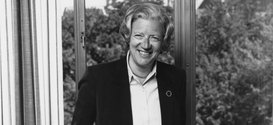
George W. Beadle 1903-1989
Trained at the University of Nebraska and Cornell, Beadle taught at Harvard, Stanford, and the California Institute of Technology before being chosen as chancellor of the University of Chicago in 1961. The trustees were excited to bring in a scientist with broad-minded views who could establish links with the humanistic disciplines. They felt that the University needed someone who could capitalize on the government's interest in funding "big science," while maintaining its commitment to liberal education. Beadle welcomed government support for higher education and discounted fears of expanding government control: "No longer can a modern nation remain economically strong and free without supporting academic research and education in a big way .... it is clear that in more and more ways and to a greater and greater extent faculty salaries will come from government funds." The University would continue to seek private support to sustain its independence, but increasing government participation was both necessary and inevitable. Funding came from many agencies for different purposes: "The government is not a monolithic giant capable of acting in unison in all its parts," Beadle said, and he felt this would protect the University from undue control. With urban renewal well underway in the Hyde Park neighborhood, Beadle faced the backlash from those who were unhappy with the changes it brought, both those who disliked the University's plans and those who felt it had not done enough. Tensions mounted as student members of the Congress of Racial Equality charged that University policies abetted racial segregation in University-owned housing. Saul Alinsky, who had studied at the University, helped to organize black residents of Woodlawn who objected to the University's plans for development in their neighborhood. |
||
| page 2 of 3| « previous | next » | |||